



Not every lost sale comes down to price, product or poor design. Sometimes the hesitation is simpler than that. A visitor has done their research on a product, is happy with the cost, and still does not check out because they are unsure when it will arrive.
On Shopify, delivery dates can help customers buy with more confidence by making the arrival promise clearer at the point where the decision is being made. For delivery-sensitive brands, that can make a really big difference to conversion rate and other parts of the business.
Delivery expectations are often valued above speed. They can shape how safe, practical and reliable a purchase feels at the point of checkout.
For some brands, that confidence gap is especially obvious. If you sell furniture, large goods, fresh food, flowers, gifts or made-to-order products, one of the biggest considerations for customers is “when will it arrive”. If it’s a gift, they need to feel the certainty that it will arrive on time, for furniture the consideration is likely around their life schedule and if they are available to accept delivery.
This is where a delivery date picker for your Shopify store starts to add more value, becoming a part of the conversion, customer experience and operational control.
Flare is one of the apps built specifically around that problem, with rules for postcode, product, shipping method, cut-off times, holidays, capacity and pickup scheduling.
Why delivery timing matters more than many Shopify merchants realise
A lot of delivery messaging focuses on speed in eCommerce. Next-day delivery. Fast dispatch. Express shipping. Whilst these still matter, consumers place a lot of trust in delivery accuracy.
Think back to the last time you ordered a new piece of furniture for the house or a new appliance. As you approach your delivery date, how many times have you opened your tracking app?
A vague delivery estimate can still leave room for doubt. For gift delivery, a customer might think an item will come too early if it says “fast shipping”. This uncertainty can add friction to a user journey that may result in them shopping with a competitor.
For the right product categories, certainty is often more persuasive than speed. A customer ordering a cheese hamper for a birthday, a sofa for a weekend delivery slot or fresh food for a family gathering does not simply want fast. They want a promise that fits their plans.
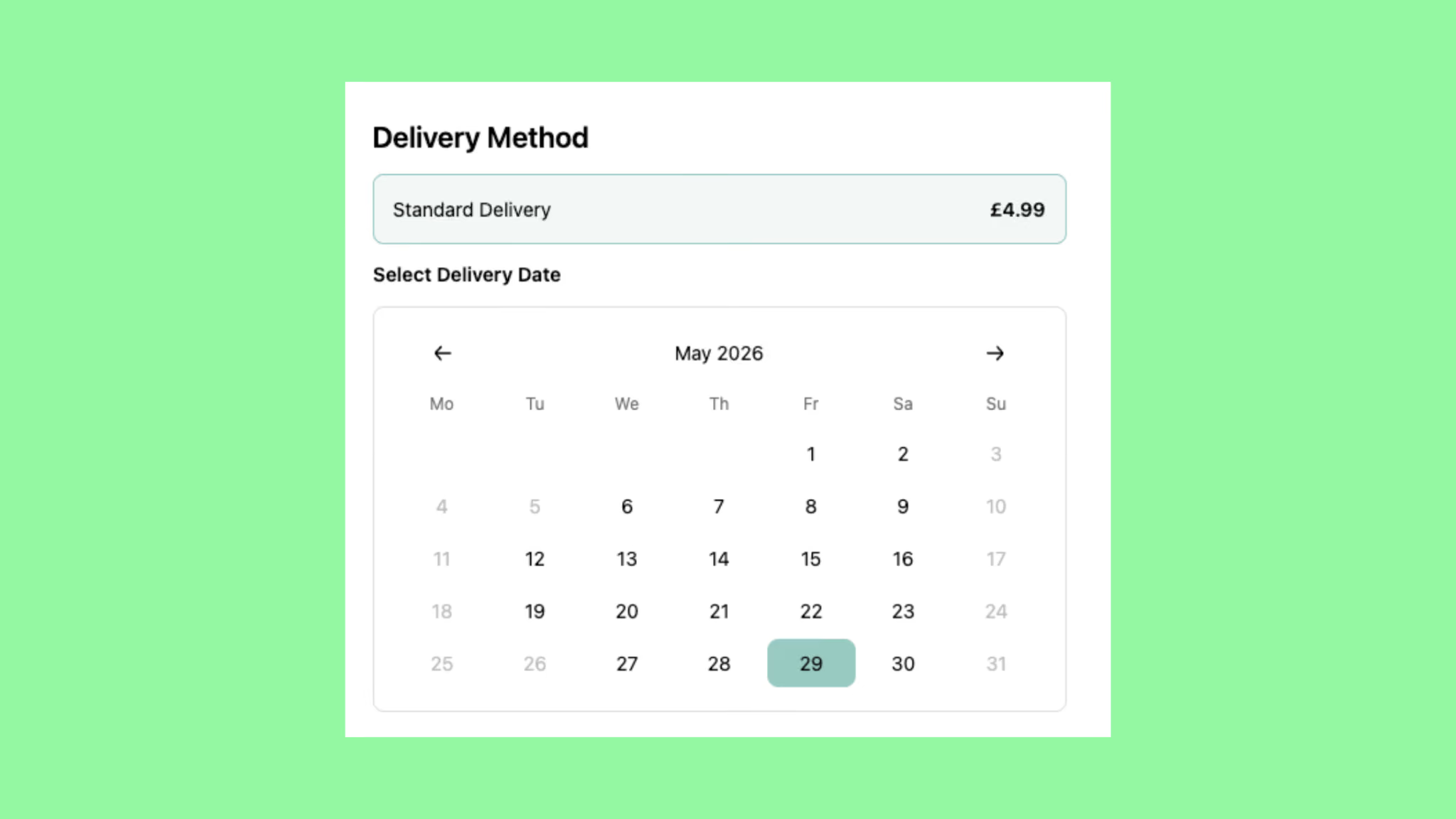
Delivery date selection gives merchants a way to move from a broad shipping estimate to a more practical customer choice. Done well, it helps the shopper understand what is available and helps the business control what can actually be fulfilled.
For Shopify merchants in the UK, a delivery date picker can provide an extra level of value for both the business and the customer. - We’ll get into the benefits for the merchant in the cost of getting delivery dates wrong below. -
Highlands, Ireland, remote postcodes, regional cut-offs, local delivery zones and carrier restrictions can all affect delivery expectations. If those rules are not made visible before the order is placed, the customer sees one promise and operations and customer support teams inherit another.
Delivery settings are often treated as admin but they are a big part of the buying journey. When the timing of an order matters, the delivery promise becomes part of the overall brand experience.
The commercial cost of getting delivery dates wrong
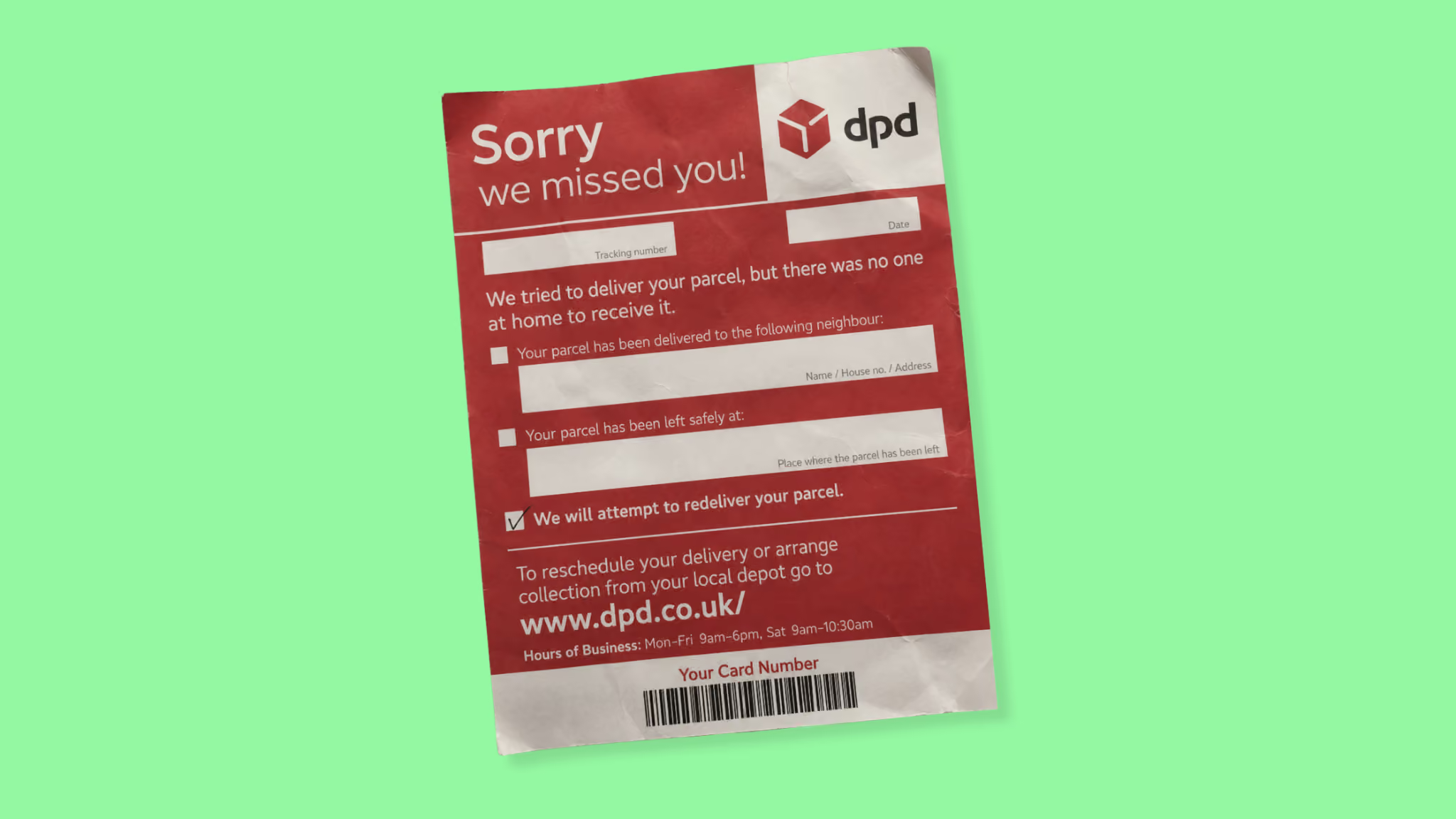
A missed delivery date is rarely just a small customer service issue. The cost can land in several places at once: lost margin, support time, failed delivery charges, damaged trust and avoidable operational stress.
For perishable products, if a customer is not available to receive chilled, fresh or date-sensitive goods, the product can spoil. That can mean the merchant loses the product, the fulfilment cost and the margin on the order. In the worst cases, the order is effectively a 100% margin loss.
For furniture and bulky goods, the pressure looks different but still hits profit. Failed deliveries and rebooked slots can create redelivery costs, warehouse handling, carrier admin and disappointed customers. The larger and more complex the item, the more expensive it becomes to fix after the event.
Then there is the support burden, a high proportion of customer service tickets are tied to delivery: where is my order, when will it arrive, can I change the date, can you confirm my postcode is covered, can I get this before a certain day? When 60-70% of support tickets are delivery-related, the problem is not just customer service volume. It is a sign that the delivery promise was not clear enough earlier in the journey.
A strong delivery date picker helps move some of that pressure upstream. It gives customers clearer options before they buy and gives teams fewer avoidable problems to untangle after the order has been placed.
Shopify brands that should consider a delivery date picker
The strongest use cases are usually the businesses where timing has a clear value.
Furniture and bulky goods
For furniture and larger deliveries, customers often need to plan ahead. They may need to be home, move other items, arrange help, or simply make sure they do not miss a delivery that is difficult to rebook.
The ability to choose a delivery date can remove a very real barrier to purchase. It also helps the business protect margin by reducing failed delivery attempts and the manual work that follows.
Food and perishable goods
Food and perishable goods are another strong example. Customers do not want chilled or fresh items left behind the bin, and they do not want uncertainty around when they need to be home. A chosen delivery date helps make the order feel safer and more practical.
For the merchant, it can also support better fulfilment planning. Date-led rules make it easier to manage cut-offs, preparation times, capacity and areas that need specific delivery logic.
Gifts, occasions and made-to-order orders
There is also a wider set of merchants where timing matters because the order is tied to a moment. Gifts, flowers, celebrations, launches and made-to-order products all carry a stronger expectation around the arrival date.
As we mentioned earlier, the delivery date certainty of a gift arriving at the right time is a key decision for a consumer when shopping for an occasion.
What a Shopify delivery date picker actually helps solve
A Shopify delivery date picker helps solve a number of friction points.
The first is customer-facing. It gives shoppers a clearer view of when their order can arrive, which can make the purchase feel more reliable and easier to commit to and improves the likelihood of customer retention.
The second is operational. A good setup should not just let customers choose any date they fancy. It should reflect the real rules of your business, whether that is lead times, order cut-offs, blackout dates, delivery zones, product preparation times or capacity.
This is where Flare’s rule-based approach becomes really useful as it’s built around the idea that customers should only see dates the merchant can actually fulfil.
A delivery date picker only adds value when the promise on the front end matches what the business can deliver behind the scenes.
Why Flare stands out for Shopify merchants
Flare supports rules by postcode, product, shipping method, order value, lead time, cut-off time, holidays and delivery capacity. That means merchants can shape date availability around the way their business actually operates, rather than forcing the business to work around a basic calendar.
For Shopify Plus brands, Flare can use native Shopify checkout extensions, which keeps the date picker close to the shipping and payment journey where it naturally belongs. Because it sits in the checkout experience rather than relying on a fragile workaround, it can be cleaner to maintain and easier for customers to understand.
For non-Plus stores, the same underlying logic can still support date selection in other positions, including cart and product page blocks. That gives merchants a route to better delivery visibility even when checkout customisation is more limited.
Fast checkouts help keep customers moving
Any feature or app that is added to a Shopify store needs to be quick, reliable and light enough so that it doesn’t get in the way of a potential customer checking out.
Flare makes use of Shopify’s native checkout extensions for Plus stores, alongside attention to network request speed, API speed and file size. Those details may sound technical, but they matter commercially.
Slow checkout experiences can weaken trust and introduce hesitation at the worst possible moment.
A well-built delivery date picker should feel like part of the store experience. It should load quickly, show the right options and keep the customer moving. The smoother it feels, the more likely it is to support conversion rather than interrupt it.
Where should a delivery date picker sit in the Shopify journey?
The best placement depends on the Shopify plan, the customer journey and the type of delivery decision being made.
For Shopify Plus brands, checkout is usually the strongest because delivery selection naturally belongs alongside shipping and payment details. It is the point where the customer is already making a purchasing decision, so the date picker can feel like a helpful part of checkout rather than an extra task.
For non-Plus stores, there are still useful options. Cart blocks and product page blocks can help show delivery availability before the customer reaches checkout, using the same rules engine behind the scenes.
What merchants should look for in a Shopify delivery date app
If you are weighing up whether a Shopify delivery date picker app fits within your business, there are a few things that merchants should look for.
Operational flexibility will be a large deciding factor for merchants. Can the app handle lead times, holidays and cut-off rules?
Logic will also play another part depending on the business. Can the availability change by postcode, product or shipping method?
Just as importantly, think about the customer experience. The date selection needs to feel helpful, not heavy. It should reduce uncertainty, not add another awkward step to checkout.
A practical checklist for merchants
- Can customers only choose dates you can genuinely fulfil?
- Can rules change by postcode, region or shipping zone?
- Can different products have different lead times or cut-offs?
- Can you block holidays, unavailable days and over-capacity dates?
- Can the app support local delivery, pickup or retail-assisted journeys?
- Does the setup work with your Shopify plan and preferred checkout position?
- Will the app help reduce support tickets rather than create more questions?
- Is the experience fast enough to protect checkout performance?
- Can delivery data flow into the fulfilment tools your team already uses?
How Kubix helped The Fine Cheese Co build delivery confidence with Flare
Supporting The Fine Cheese Co in their migration from Magento to Shopify Plus, we saw first-hand the delivery impact on the business and customers.
Having been on Magento for a number of years, the business had become operationally heavy and restrictive. They had operational workarounds to accommodate a restricted tech stack, which left them spending more time dealing with orders rather than being able to focus on new ways to grow the business.
As part of every Shopify migration at Kubix, we go through a viability audit. This helps to assess the current tech stack and how it works across the business. In The Fine Cheese Co’s case, they were having to make operational adjustments based on the limited tech manoeuvrability they had with their legacy system.
The Fine Cheese Co’s move to Shopify enabled them to make simple front-end changes, such as a delivery date picker without the added development costs.
As they have such a complex catalogue with the added nuances of food retail, we restructured product data using Shopify Metafields, which supported clear handling of product types, bundle logic and variant consistency.
This enabled the team to know exactly what was going in each order and the order type, such as if it was a hamper, part of a gift set, standard order or a subscription.
Having that data structure was an important part of the migration to Shopify. Without it, they wouldn’t have been able to have the foundational structure in place that supported the behind the scenes operations at their Bath Cafe restaurant to fulfil orders efficiently.
Previously, The Fine Cheese Co had to download spreadsheets of orders and upload them to DPD, creating a really disconnected fulfilment process that wouldn’t have been able to handle a complex integration such as a delivery date picker.
The original viability audit allowed us to make precise decisions about what would be changed in their operational workflows and what would be kept. Part of that was a direct integration with DPD from their Shopify store, removing the need for order exports and giving the ability to provide accurate delivery times.
To reduce customer service requests for delivery dates and times, we integrated Flare into the checkout to create a delivery experience that mirrored how they now fulfil orders.
With Flare, customers can choose a suitable delivery date as part of the buying journey, while the business can control the rules that sit behind those choices.
For the customer, the benefit is confidence. They can place an order knowing when it is expected to arrive, which is especially important when the order is perishable, planned for a gift or needed for a specific occasion.
For The Fine Cheese Co, the benefit is control. The delivery promise becomes easier to manage, support teams have fewer avoidable delivery questions to handle, and operations can work from clearer, more accurate date information.
This is where Kubix’s role as a Shopify Platinum Agency becomes important. App selection is only one part of the decision. The stronger work is in mapping how the app should support the customer journey, the fulfilment process and the commercial outcome. For The Fine Cheese Co., Flare helped turn delivery date selection into a more reliable, confidence-led part of the Shopify experience.
Need help making your next Shopify move?
Kubix is a Shopify Platinum agency that helps eCommerce brands build better stores, create better customer experiences and grow with more confidence.
Get in touch and let’s grow stronger, together.


.png)