




At Kubix, we’ve spent a decade getting under the hood of Shopify stores, mapping problems, integrating technologies, and shaping smart growth strategies for brands that want to move faster and more confidently.
That means we look at Shopify Editions through a very specific lens: What will make real businesses grow stronger?
Not hype, not noise. Substance. The right tools, applied in the right way.
After we'd finished admiring the CSS work of the new Shopify's Winter Editions ‘26 we picked out some of our favourite updates that will provide practical use for eCommerce brands looking to grow.
Why Winter '26 Matters for Growing Shopify Brands
Shopify releases a major Editions update twice a year, each one shaping what the next generation of eCommerce can look like. We’ve seen Foundations, Horizons, Unified, and even the cheeky Boring Edition, each building on Shopify’s mission to simplify commerce.
This years focus is a sharp one. It's one that hones in on everything that Shopify has been developing for over 2 years. We have seen a lot of the features already, such as Sidekick, the development of B2B and more.
But now, Sidekick has evolved from a handy assistant into an actual operational co-pilot. Shopify is also streamlining theme development, expanding B2B capability, and removing friction across admin workflows.
For eCommerce teams who are already stretched, these updates give something priceless; clarity, speed, and more time to focus on growth.
It's worth noting that a lot of the features in Shopify's Winter Editions aren't available to everyone yet.
Here are the Shopify Winter Editions 2026 features worth caring about.
Our Favourite Picks:
- Shopify POS Hub for Retail
- Getting Products Discovered in AI
- Shopify Sidekick
- Shopify Rollouts
Shopify POS, A Stronger, Smarter Retail Toolkit for Modern Brands
Before diving into the AI-driven updates of Winter ’26, it’s worth pausing on something closer to our heart at Kubix: Shopify POS.
Over the last few years, Shopify has transformed its point-of-sale offering from a lightweight add-on into a robust retail engine that sits comfortably alongside leading enterprise systems, but with all the flexibility Shopify is known for.
We’ve seen this evolution firsthand. From University College London, to Highgrove Gardens, to Hilditch & Key, and many more retailers we’ve helped migrate, unify and modernise, Shopify POS has become a cornerstone of how omnichannel brands operate today.
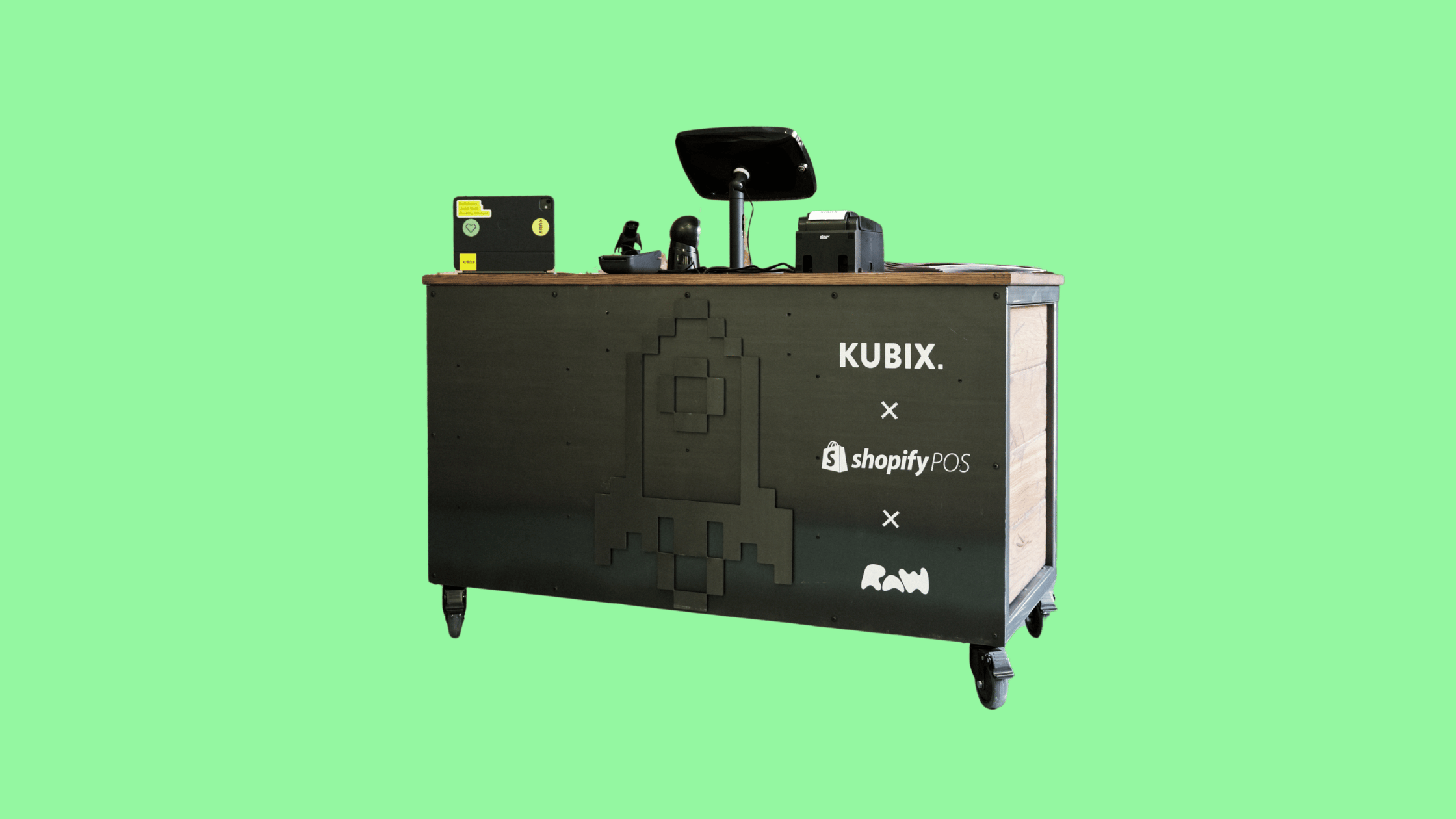
What makes the Winter ’26 cycle particularly exciting is the continued investment in both POS software and retail hardware, especially the introduction of the Shopify POS Hub.
Everything You Need to Know about Shopify POS Hub
What makes Winter ’26 especially exciting is Shopify’s investment in retail hardware, culminating in the launch of the Shopify POS Hub, a centralised device designed for larger-scale merchants and more advanced retail environments.
As our Operations Director, Joseph put it:
Software companies trying to build hardware often miss the mark, but Shopify may have finally found the right balance.
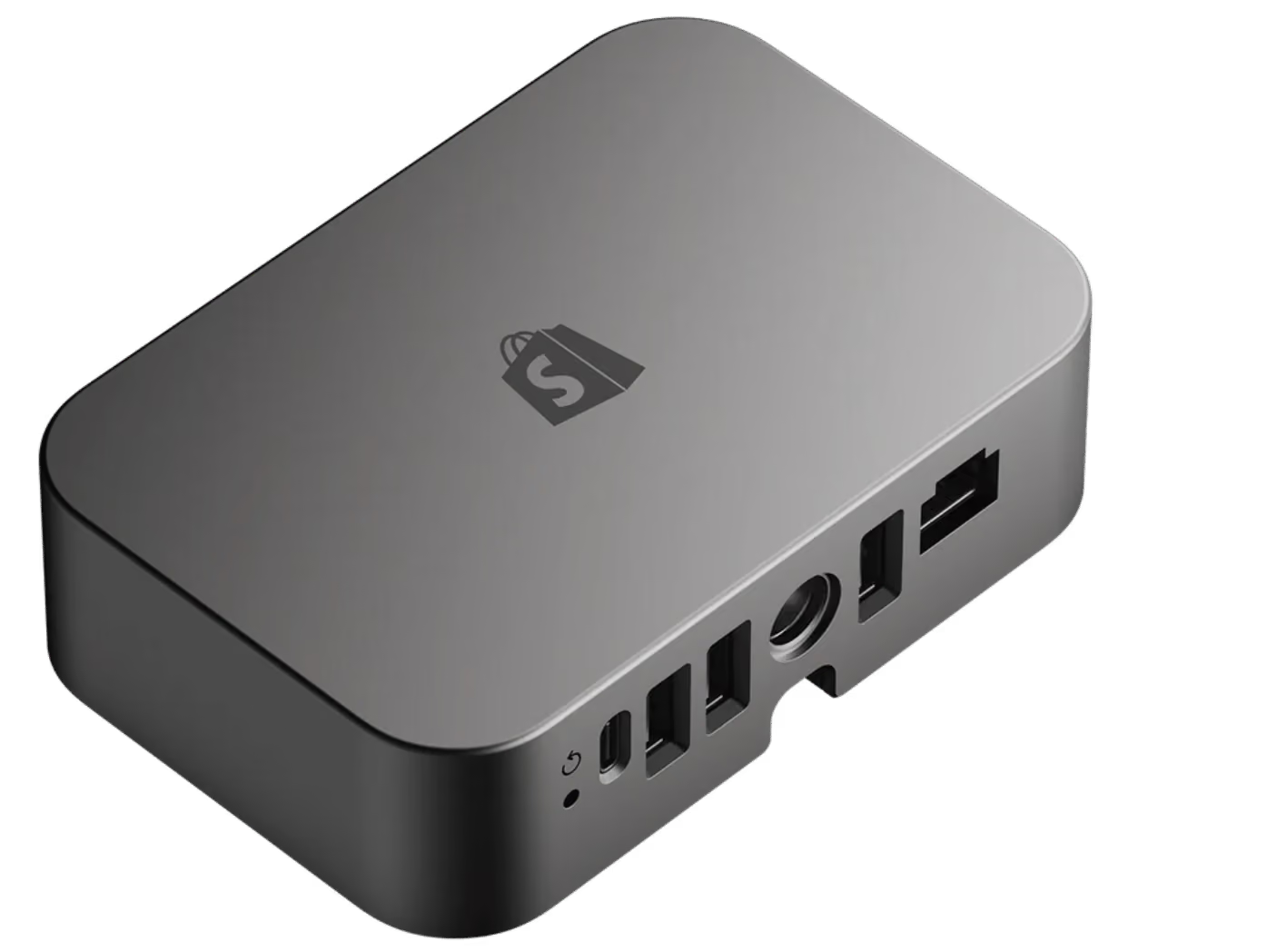
Here's where Shopify's POS Hub becomes genuinely impactful:
1. Remote Management & Fleet Diagnostics
For IT teams, this is a leap forward. The POS Hub introduces remote visibility and troubleshooting directly from Shopify Admin, mirroring some of the intelligent diagnostic capabilities found on Shopify’s Terminal.
For retailers with multiple stores, pop-ups, or seasonal staff, the ability to understand device health, connectivity and configuration remotely reduces friction and keeps operations running smoothly.
This bridges a major familiarity gap between traditional enterprise fleet management and what Shopify historically offered.
2. Wider Hardware Compatibility
One of the biggest blockers we see during enterprise POS audits is this: “Can we keep our existing hardware?” Nearly every project asks the same question.
Earlier this year, HID scanner compatibility was a welcome step. The POS Hub goes further by enabling wired connections, allowing retailers to preserve existing peripherals rather than replacing everything.
This reduces capital expenditure, speeds up rollout, and gives IT teams more confidence in the ecosystem.
3. A Subtle but Important Mindset Shift
The biggest impact may actually be psychological.
By investing in physical interfaces and more enterprise-leaning hardware, Shopify is building early trust with IT teams, often the key decision-makers or blockers on large POS projects. These teams care deeply about compliance, PCI concerns, VLAN setup, network stability, device security, and predictable support structures.
Traditionally, Shopify POS was dismissed too quickly due to its tablet-first form factor. The POS Hub changes that conversation. It signals seriousness. It shows Shopify understands the expectations of enterprise retail environments.
This shift in perception alone opens doors for mid-market and enterprise merchants who previously wouldn’t have considered Shopify POS as a legitimate option.
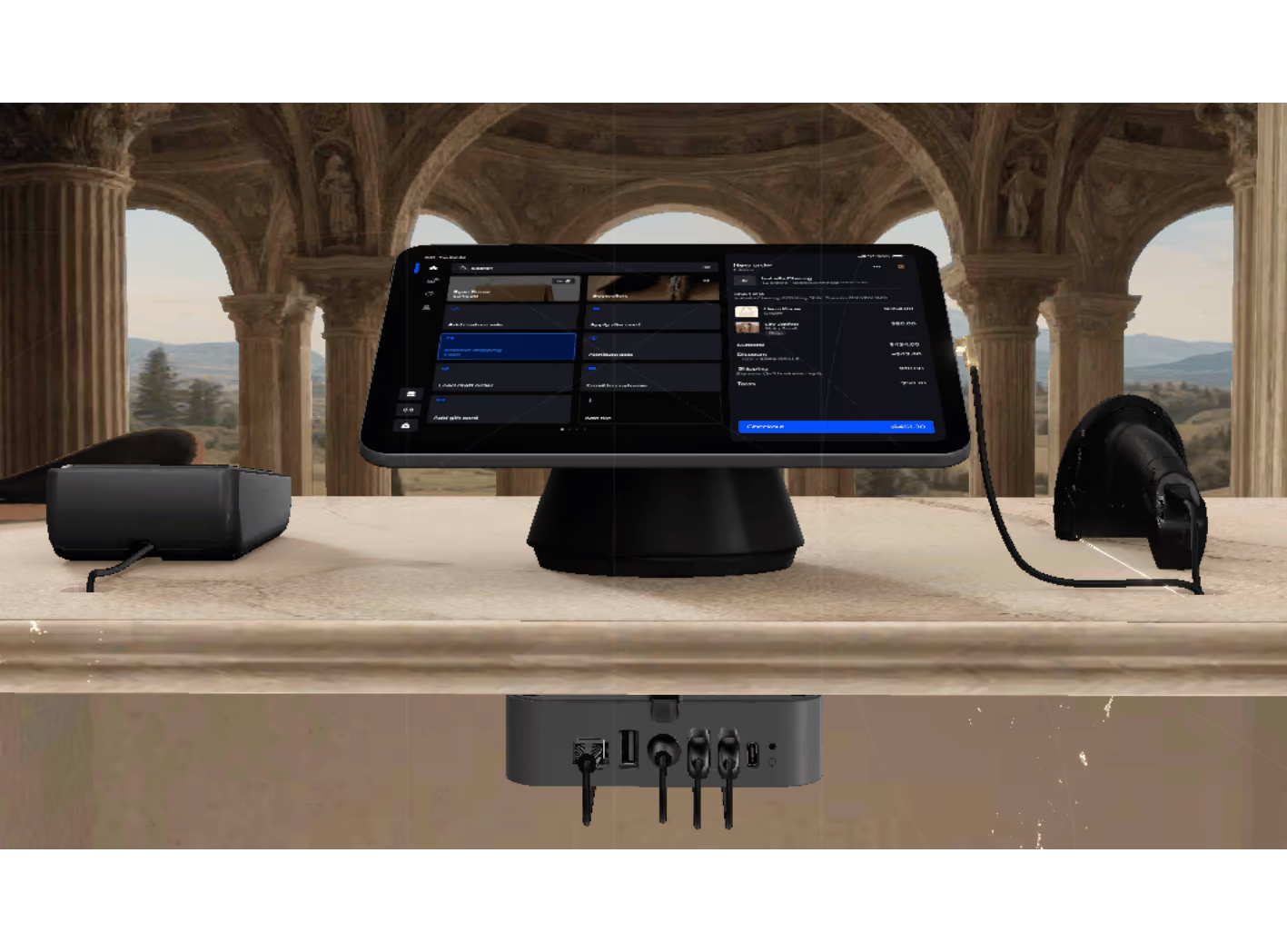
Why We See Shopify POS Growing Even Stronger
The POS Hub won’t be right for every retailer, and Shopify’s existing hardware continues to serve smaller merchants exceptionally well. But its introduction marks a clear direction of travel: Shopify is investing heavily in the retail layer, not just eCommerce.
Combined with the flexibility of Shopify Payments, unified customer profiles, seamless returns/exchanges, and mobile checkout, the platform now gives merchants the confidence to:
- run premium pop-up experiences
- test physical retail locations quickly
- modernise legacy stores
- unify ecommerce and retail operations under one system
- build richer customer journeys without technical overhead
For us at Kubix, this is one of our standout features of Winter ’26. It validates everything we’ve believed about Shopify’s trajectory: that the future of commerce is unified, flexible, and built around the real behaviours of modern shoppers.
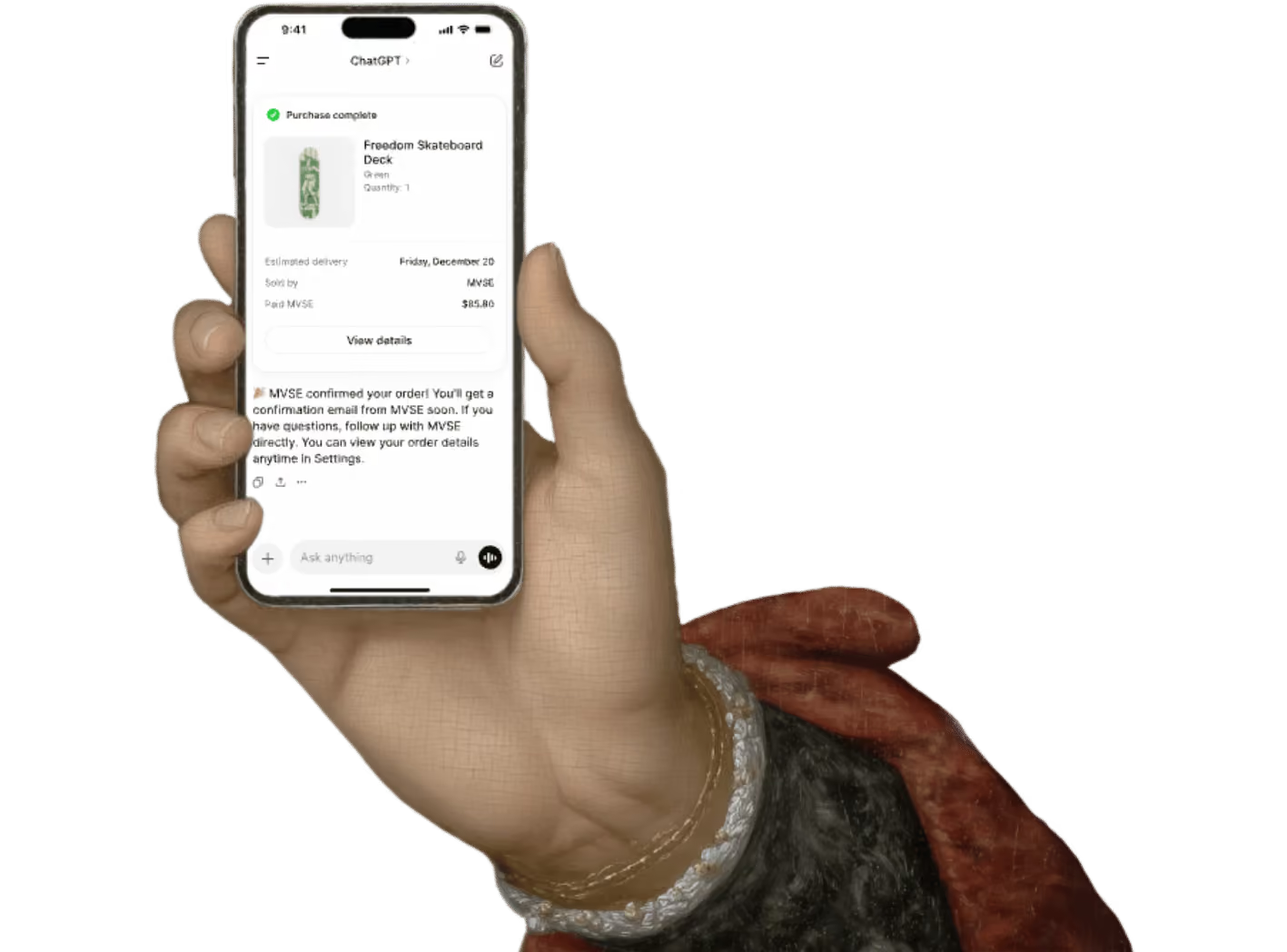
Agentic Storefronts; Making Shopify Products Discoverable Inside AI Chats
If 2024 was the year brands began experimenting with AI for marketing, then 2026 is the year AI becomes a fully fledged commerce channel. Consumers are searching differently. They ask ChatGPT for gift ideas, product comparisons, “best of” lists, or problem-solving recommendations, and the brands that appear are the ones winning attention before a buyer ever lands on a website.
Shopify’s new Agentic Storefronts feature gives merchants a structured and reliable way to show up inside these AI environments. Instead of hoping that LLMs interpret your product data correctly, Shopify now lets you define and optimise that data directly within your admin.
Throughout 2025, we saw glimpses of how AI discovery could work in practice. Some brands drove incremental traffic by publishing deeper educational content on their Shopify stores such as blogs. Some appeared in ChatGPT’s conversations simply because their product data was clean and structured.
Others experimented with “answer-first content” designed to be surfaced in LLM reasoning, rather than traditional keyword search.
Agentic Storefronts formalises this shift. It turns AI discovery from guesswork into a controllable channel.
Soon, within your Shopify admin you'll be able to
- edit and preview the data used by AI agents
- define your schema clearly
- group products with standardised attributes and metafields
- ensure agents understand your variants, uses, materials and key selling points
- maintain a Knowledge Base that feeds accurate answers about returns, shipping, duties and policies
For businesses, it means a lot of the hard work is already done and it will be come a bit of a box ticking exercise to ensure you're providing LLMs with the correct structured data.
As Shopify describes it, you configure the data once, and the Shopify Catalog syndicates it everywhere AI chats are happening. For buyers, the experience is seamless.
Someone searching conversationally for “winter jackets under £150 suitable for commuting on my bike” can be shown your products directly inside the chat interface, complete with an Add to Cart option and checkout powered by Shopify. The order appears alongside your usual online store orders, ready for fulfilment like any other channel.
For merchants, it’s a new frontier where optimising your product data becomes as essential as optimising your category pages.
And we think this is the early stage of something much bigger.
Agentic Storefronts gives brands the tools to participate intentionally in the shift that is currently happening with consumer buying behaviour.
As always, the brands who have strong foundations, clean product structures, consistent metafields, clear attributes, will see the strongest results. Shopify is doing the heavy lifting when it comes to signals and structure, but the quality you feed into the system will determine the quality of the discovery you get back.
As LLMs grow stronger, conversational commerce could become one of the most efficient acquisition channels for businesses.
Shopify Sidekick; AI That Thinks for You (But Still Needs Solid Foundations)
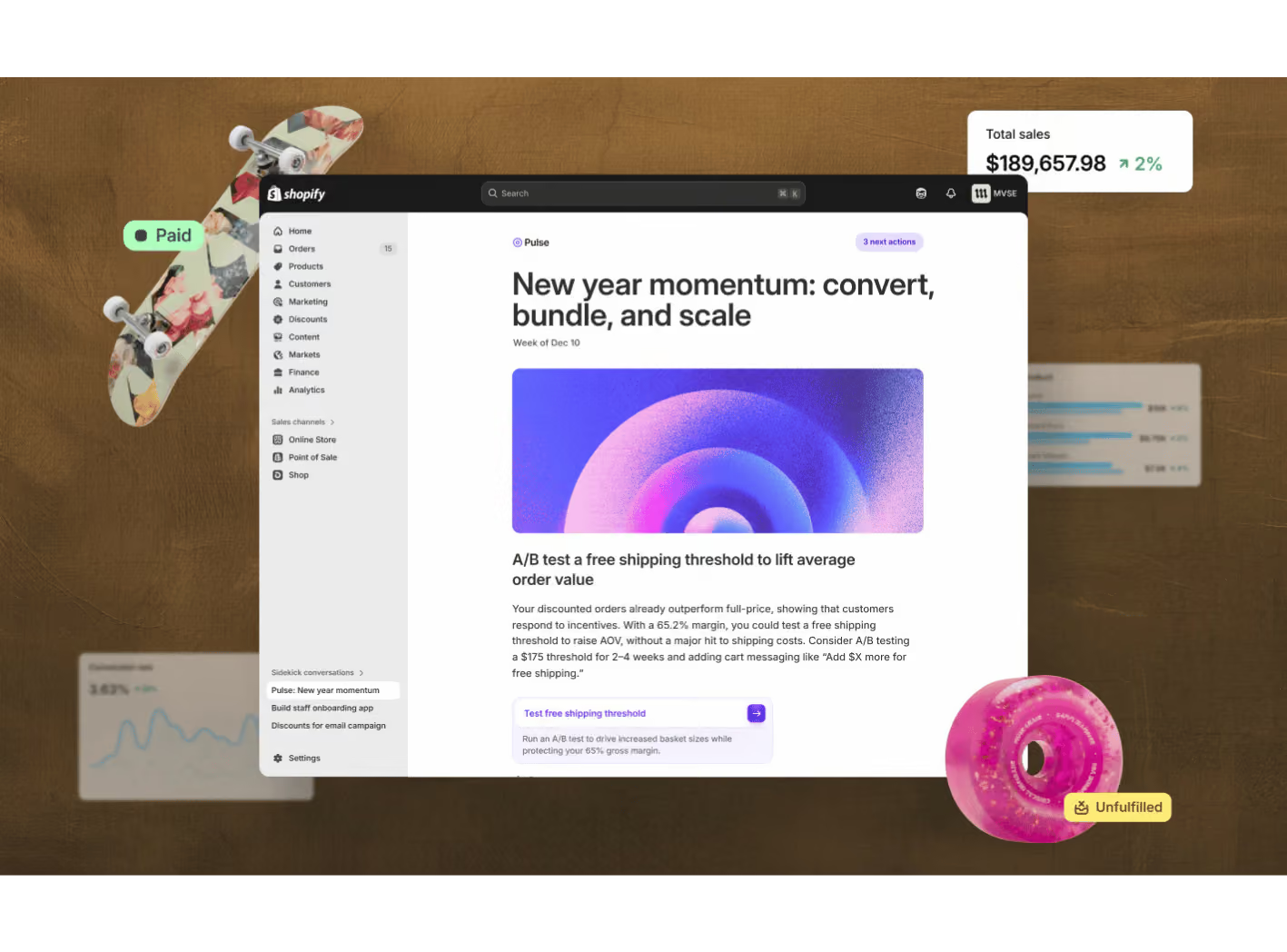
Sidekick Pulse
Among all the Winter ’26 updates, Sidekick Pulse is the one we believe will mature into a genuinely transformative tool for merchants. Shopify has taken its assistant beyond simple prompts and turned it into an engine for proactive insight, a system that analyses your performance, interprets market trends and suggests next steps before you even think to ask.
In practical terms, Pulse begins to take on one of the hardest parts of running an eCommerce business: the constant thinking.
The forecasting. The spotting of early patterns. The “should we act now or wait another week?” decision-making that fills the brain of every founder and eCommerce manager.
Pulse lightens that load. It reviews your data, identifies opportunities or risks, and presents them as clear, actionable recommendations. For overstretched teams, this is a gift, direction on what they need to do without sifting through tonnes of data and reports.
But - and this matters - AI can only work with the information it has.
Pulse won’t understand the subtleties of your supply chain, your margin structure, your upcoming campaigns or that warehouse issue you resolved last Friday. It relies entirely on the quality and completeness of the data inside your store.
Which is exactly why foundations matter. The brands that will extract the most value from Pulse are the ones with clean product structures, consistent tagging, accurate inventory, and well-implemented operational processes. When the inputs are strong, the recommendations become sharper, braver and far more commercially useful.
Even with those natural limitations, the direction of travel here is exciting. Pulse will improve the more it learns about your store, your behaviours and what ‘good’ looks like for your category. It’s a feature with long-term potential, and one we expect to keep growing stronger.
Shopify Sidekick Custom App Generation
One of the most exciting additions in Winter ’26 is Sidekick’s new ability to generate lightweight custom apps. Until now, building bespoke tools inside Shopify required engineering time, scoping, feedback cycles and the usual rounds of refinement. Sidekick changes the starting point entirely.
Over the last few weeks, we’ve been putting this to the test. We asked several members of the Kubix team - including those with zero development experience - to see what they could create using nothing more than Sidekick and a few well-structured prompts.
James, our Solutions Advisor and committed Muay Thai fan, decided to build something fun but commercially meaningful: a Fighter Name Generator. Wesbite visitors answer a few playful questions, get their personalised fighter name, and are then added to a tailored Klaviyo flow based on their selections.
In just a few minutes, Sidekick produced the logic, the structure, and the working app framework. No digging through documentation, no hunting for snippets, no code wrestling. Just a prompt, a concept, and a real, functional lead-capture tool.
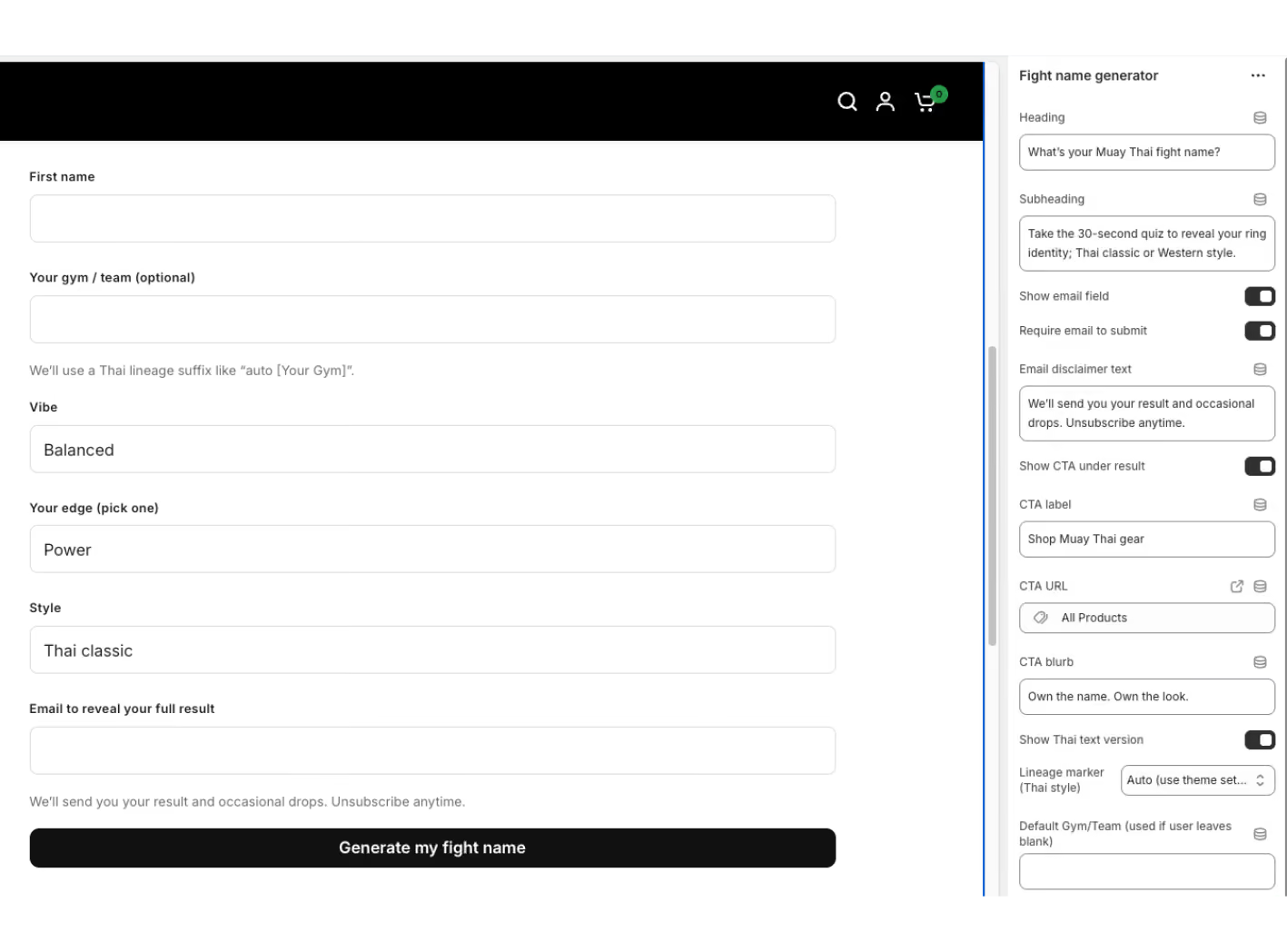
First-party data is invaluable, and tools like this would usually sit on a “nice but not essential” wishlist because of time or resource constraints. With Sidekick, merchants can test ideas, create micro-experiences and unlock new revenue-generating activities at almost no cost beyond the creativity of the prompt.
For founders and eCommerce teams, Sidekick isn’t just saving time, it’s expanding what becomes possible.
A Wider Look at Sidekick: Smarter, Deeper, Everywhere in the Admin
What we’re seeing is Shopify weaving Sidekick into the parts of store management that used to feel slow or technical. Earlier versions focused on blocks and theme sections. Now, Sidekick can help to edit global design settings, adjust UX elements and refine styling across your storefront.
If you want to soften your buttons, increase corner radius or shift your colour scheme, you can now ask Sidekick directly:
“Make the buttons more rounded.”
Within seconds, it finds the correct settings and applies the change.
No navigating menus. No second-guessing where a designer placed the controls. Just speed, clarity and fewer barriers for teams who want to move fast.
Sidekick is steadily evolving from a helpful assistant into a core layer of Shopify itself, a layer that reduces friction, accelerates execution and frees eCommerce teams to focus on strategy instead of admin.
Rollouts, A/B Testing and Scheduled Theme Changes, Built into Shopify
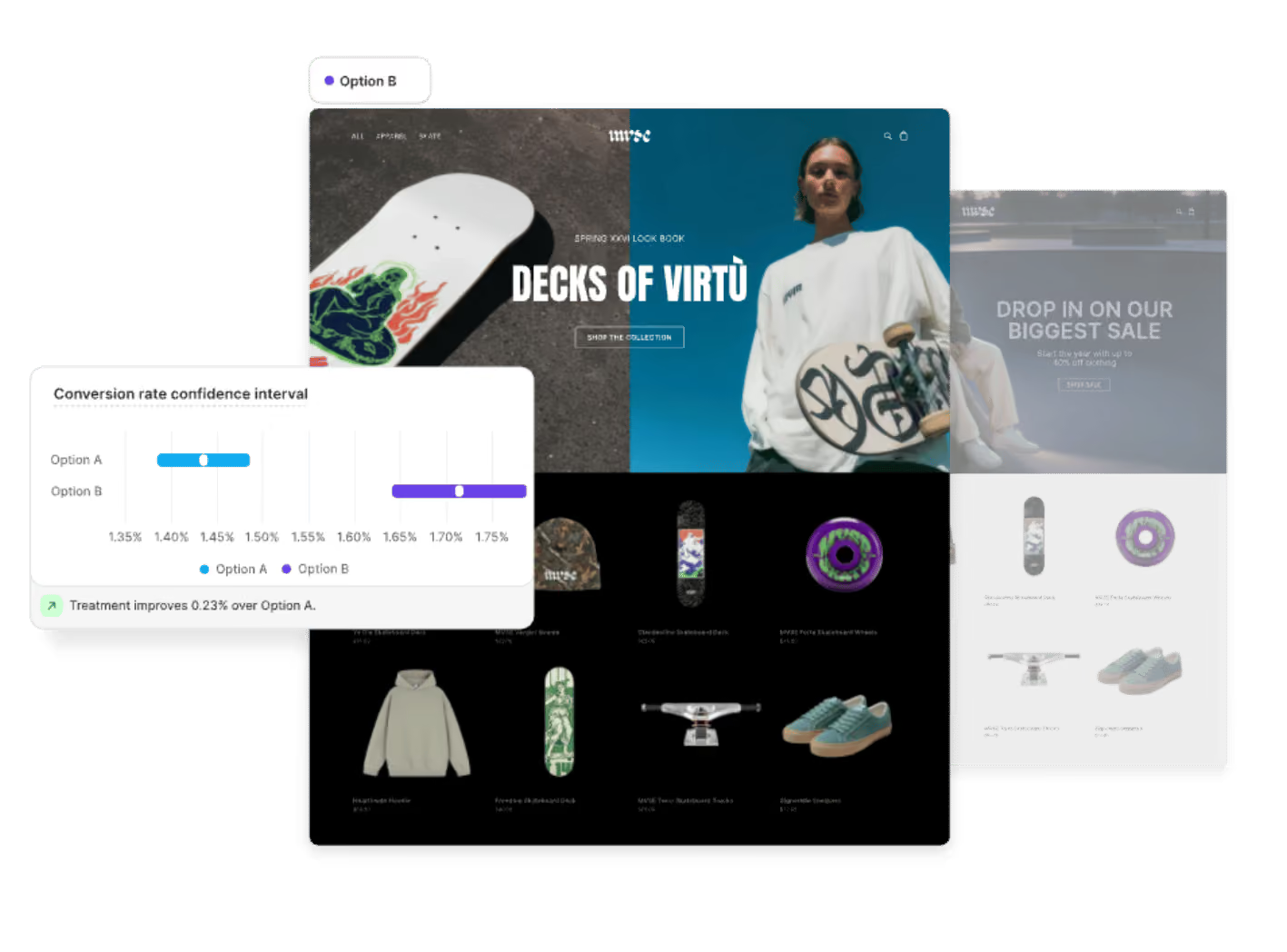
One of the most quietly powerful additions in Winter ’26 is Rollouts, Shopify’s new way to schedule theme updates and run A/B tests directly inside the admin. For years, brands have relied on third-party tools or manual workflows to experiment with their storefronts.
At its core, Rollouts lets you:
- create variations of your storefront
- set them live at a specific time
- run true A/B tests across different themes or layouts
- automatically revert or progress changes based on your schedule
For merchants who run frequent promotions, seasonal campaigns or need to time a launch down to the minute, this is a huge operational win. Instead of staying up late waiting to switch themes, or juggling drafts across devices, Rollouts handles the entire process automatically. It also unlocks a more mature testing culture for brands that want to grow.
Want to test a new product page layout? A simplified navigation? A bold new hero section? Rollouts lets you experiment safely and see precisely how each variation performs.

Once your A/B test is complete, Sidekick can help you implement the winning version instantly.
What Rollouts represents is a shift towards faster, more iterative optimisation. It lowers the barrier to testing, reduces the risk of human error, and turns storefront improvements into something merchants can execute confidently and consistently.
Shopify’s Winter ’26 Edition is a signal of where eCommerce is heading and how merchants will grow in the years ahead.
At Kubix, our role has always been to help merchants build the right foundations, adopt the right technologies and make the right decisions that lead to sustainable growth. Winter ’26 simply gives us (and you) more powerful ways to do that.
As Shopify becomes more agentic, more predictive and more connected, the opportunity for brands grows with it. The next generation of eCommerce won’t be defined by who has the loudest storefront, but by who uses the smartest tools with the clearest intent.
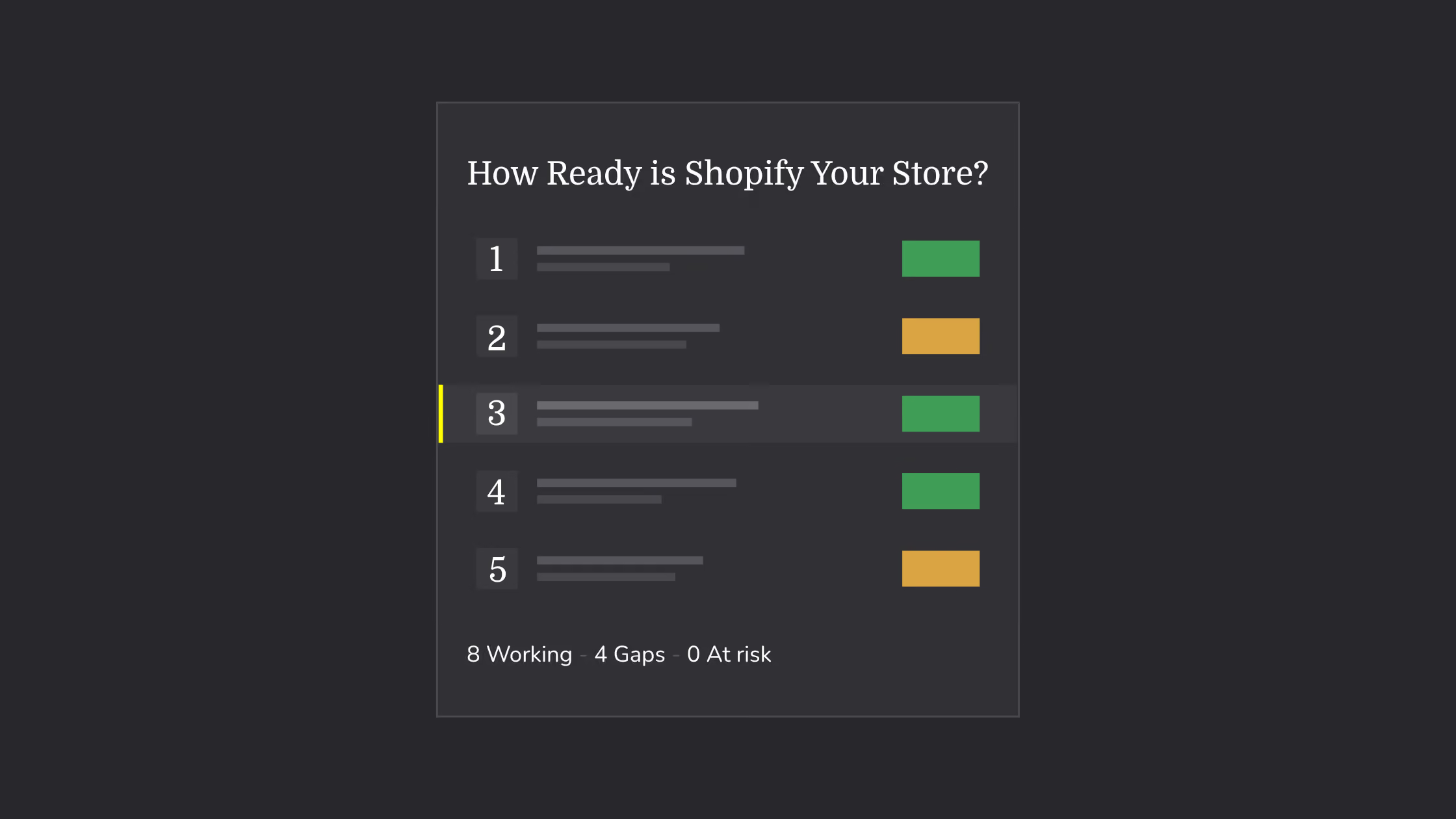
Every brand will feel the impact of Winter ’26 differently.If you’d like support refining your tech stack, improving your Shopify setup or exploring which of these features will move the needle for your business, our team is ready to help.

.png)