


TL;DR:
- Natural social-first content is an absolute must for eCommerce brands getting serious about paid ads
- Organic content can be a useful signal for paid ads, helping brands understand which messages, formats and ideas are already connecting with their audience.
- Repurposing content for paid media should go beyond resizing assets. The strongest ideas need to be adapted for different platforms, funnel stages and customer motivations.
- Structured creative testing helps brands learn what customers need to see, feel and believe before they buy, from hooks and proof points to product benefits and landing page message match.
- Better creative inputs can help reduce creative fatigue, improve click quality, support campaign scaling and feed useful learnings back into the wider Shopify customer journey.
Ad creative has quickly become one of the biggest performance variables for eCommerce brands running paid ads. Historically, paid media teams could look inside the ad account when results started to slow down and make more direct adjustments to bidding, audience targeting, campaign structure or objectives.
Those variables still matter and still require control, but the role of paid media expertise is changing.
Across platforms like Meta, Google and TikTok, more of the delivery is now shaped by automation.
Campaigns are broader, algorithms make more of the decisions around who sees an ad, when they see it and where it appears, and the platforms themselves are taking on more of the optimisation.
That does not make paid media management less important. It means the expertise and effort need to be applied differently.
Strong strategy, clean data, tracking, commercial judgement and platform knowledge are still essential. But increasingly, the biggest gains come from improving the inputs that automation has to work with. That means stronger creative, clearer messaging, better landing page alignment and a more structured approach to testing and learning.
That makes the quality of the creative input much more important.
For many eCommerce brands, creative is now the variable that decides a campaign's success.
That shift is already showing up in the data. LinkedIn’s 2025 research, cited by Mediaworks, found that creative contributes 47% of sales impact in an ad campaign, making it more influential than targeting. As platforms take on more of the targeting, bidding and delivery, creative is becoming one of the biggest performance variables brands can still influence directly.
For Shopify brands, this creates a clear challenge.
It is no longer enough to create a few polished assets for a campaign and hope they carry the account for weeks. Brands need a system for producing, testing, editing and repurposing creative at pace.
Not just more creative. Better creative, built with a reason behind it.
Creative is the Variable of Paid Social eCommerce Growth
When people talk about ad creative, it can sound like the finishing touch. The visual layer. The thing that makes a campaign look good.
That undersells its role.
Creative is often the first meaningful interaction a shopper has with a product. It has to earn attention, explain the value quickly, make the product feel relevant and give someone a reason to act.
In eCommerce, that job is even more important. A customer may have never heard of the brand before and social media users have much less tolerance for ads that appear in their newsfeeds that aren’t relevant to them.
The ad creative has to do a lot of work before the website ever gets a chance.
That means ad creative needs to be treated as a commercial asset, not just a visual output. It should be planned, tested and reviewed in the same way a brand would review landing pages, product merchandising or conversion rate.
The strongest brands build creative systems, not one-off campaigns
One of the biggest issues for eCommerce brands running paid marketing is that creative production is often too campaign-led and becomes far too polished.
It might be that a product launch is coming up, so assets will be created for that specific launch, new sale or seasonal release. That approach can work, but it often creates pressure. Teams end up reacting to the calendar rather than building a continuous creative pipeline, where you can test and learn.
Some core principles to keep in mind when producing campaigns and systems for creative production are;
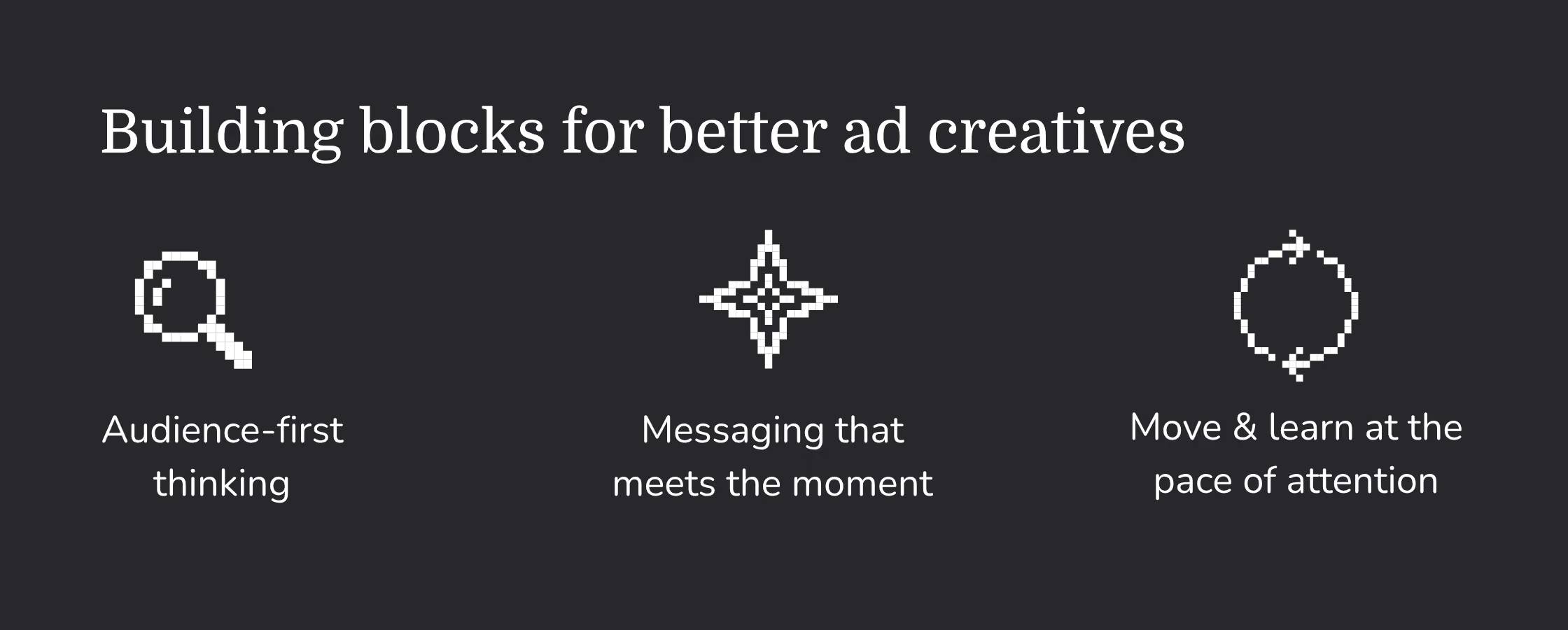
1. Audience-first thinking.
2. Messaging that meets the moment.
3. Move at the pace of attention.
Trends and culture move quickly these days, staying ahead of that helps bring brand relevance and gives ad teams more creative freedom.
Whilst high quality and polished content does have its place, for ad creatives, natural social-first content is an absolute must for eCommerce brands getting serious about paid ads.
A stronger approach is to build a system.
That means having a clear process for gathering ideas, producing content, testing different angles, learning from performance and repurposing what works across paid and organic channels.
eCommerce brands can build content around a number of different areas. The creative process around those different content angles dictates the scale that you’re able to take your ad campaigns to.
For example, a brand might build content around:
- Product demonstrations
- Customer reviews
- Founder or team-led explanations
- Unboxing content
- Styling ideas
- Before-and-after use cases
- Common customer questions
- Objection handling
- Comparison content
- Social proof
- Seasonal buying moments
Each of those content types can be edited into multiple formats for paid social, organic social, email, landing pages and product pages.
This is where the opportunity becomes much bigger than simply “making more ads”.
A good creative system allows brands to create once, learn quickly and reuse intelligently.
It’s worth noting that every organic piece of content doesn't have to be a production shoot with high quality cameras, some of the best performing ad and organic content these days is shot on a phone.
Organic Social Content Performance: Useful Creative Signals
A lot of eCommerce brands underestimate the power of organic content. A lot of time is spent debating whether a piece of content on your brand’s Instagram grid will look right, which, in the long run, is actually hurting your brand. Content on social media is surfaced differently today than it was 5 years ago. A little bit more on that later.
Organic content is not a perfect predictor of paid media success, but it can be a useful signal.
When a piece of organic content earns strong engagement, saves, shares, comments or click-throughs, it tells you something. It suggests the message, format, or idea has connected with the audience.
That does not mean every organic winner should immediately become a paid ad. But it does give the paid media team a smarter starting point.
Instead of guessing which creative angles might work, brands can use organic performance to identify the content people are already responding to. This alone can help cut out a lot of the back and forth in the ad creation process. Rather than speculating on what might work, you have a clear signal of a content piece that resonates with an audience.
That could be a product demo that explains the value clearly or a customer review that captures the real buying motivation. Sometimes it can be a simple video that shows the product in a different context than a polished campaign asset would.
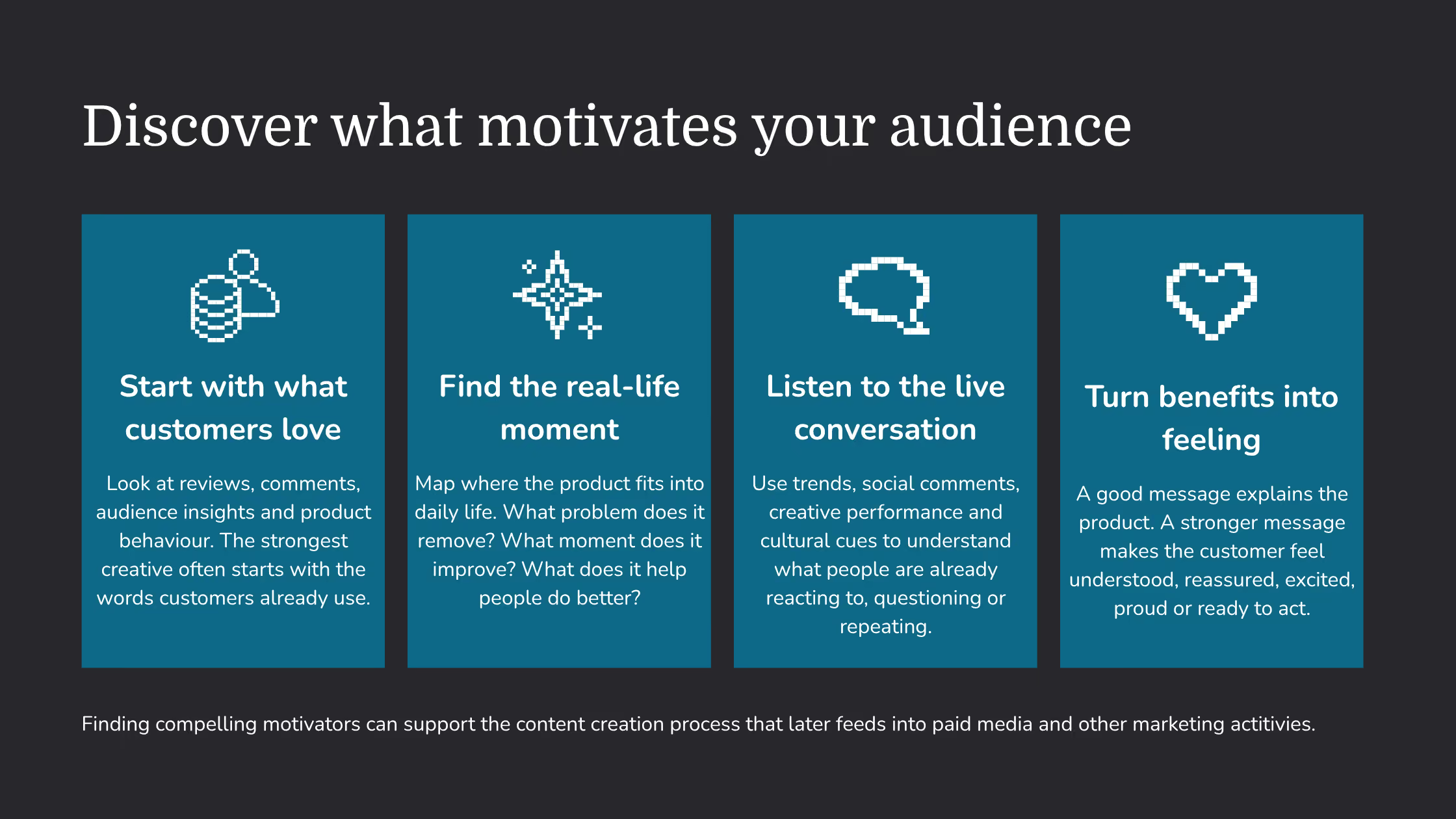
Putting paid media spend behind content that has already shown signs of audience interest can help reduce wasted testing time. It gives the algorithm stronger signals from the start and gives brands more confidence that the creative has a real reason to be in the account.
Social media algorithms in 2026 are less about what brands consumers follow. They built on interest graphs of what types of content people are interacting with. Social media companies get the data back on what content people are interacting with instantaneously, giving consumers a more curated feed of content that is more likely to catch their attention and keep them on the platform longer.
This is why it can hurt your brand in the long run, trying to perfect your Instagram grid and worrying about how aesthetically pleasing your feed is. Content production should be much faster today, more natural and less polished.
The content we consume, and the algorithms that feed us content are constantly evolving. Static images have performed well in the past, but that has shifted massively since 2020.
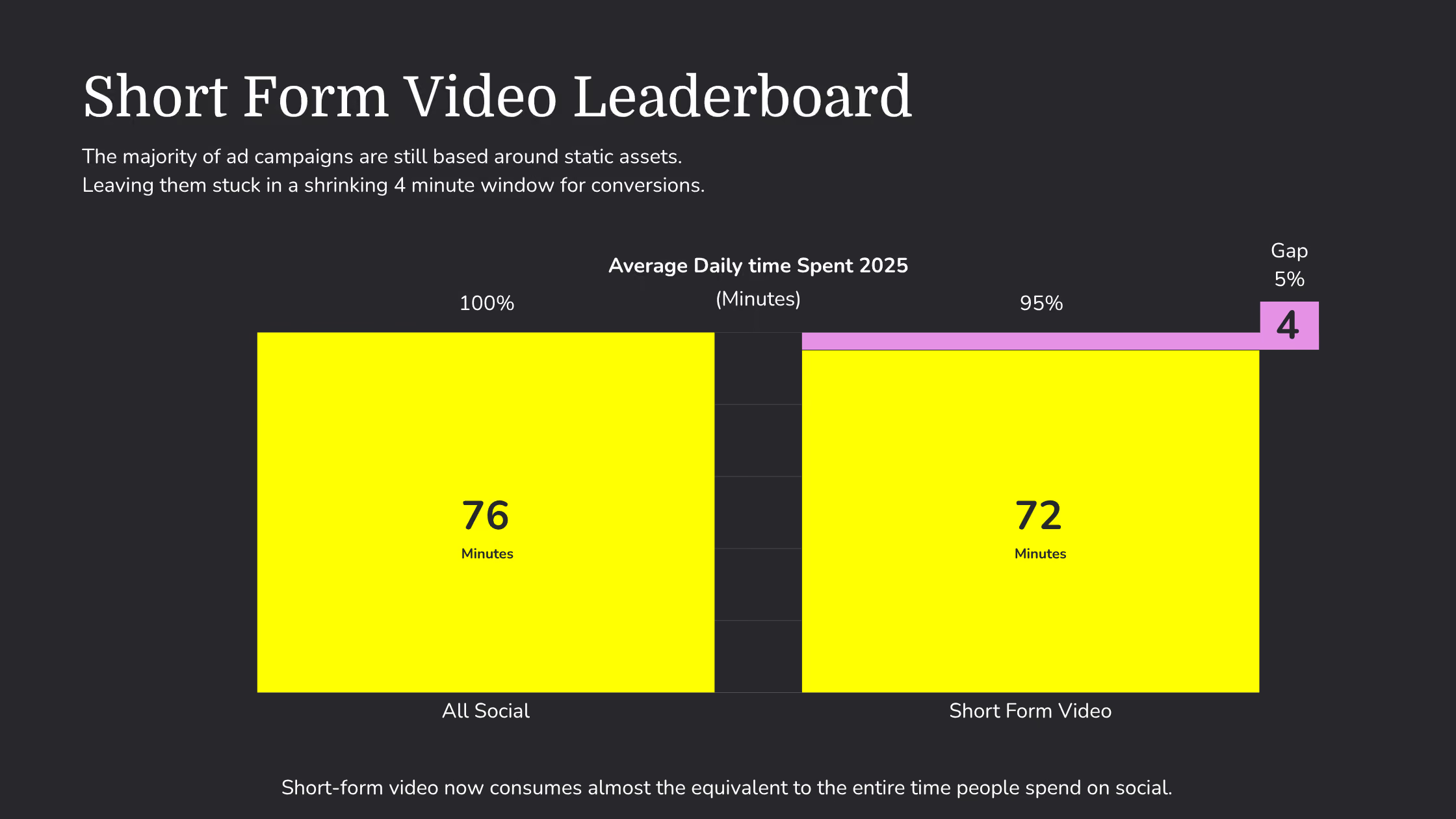
Short-form video has changed the pace of content consumption. Users can get through a huge amount in just a few minutes, which is where the four-minute trap catches many eCommerce brands out. Most performance campaigns are still built around static assets, leaving them to compete for attention within an ever-shrinking four-minute window.
The four-minute trap is the shrinking gap between the time people spend on social media overall and the time they spend watching short-form video. With almost all of that attention now concentrated in video, static-led campaigns are competing for what is left.
Short form video now takes up 95% of time spent on social media. The past 5-6 years since Instagram Reels launched is the fastest shift of attention in history. Human attention has migrated to short-form content and is now the biggest video format globally. Creating Reels (9:16 + audio) is now essential.
When you take a shift in human attention and platform changes, the key is not to put ad spend behind content blindly. The key is to understand what pieces of organic content are working, then adapt it for the job paid media needs it to do.
Repurposing Social Media Content for Paid Marketing
Repurposing is not the same as just resizing for different placements or platforms.
A TikTok-style product video might not work as a Meta retargeting ad without changes. A strong organic Reel might need a sharper hook, clearer product framing or a more direct call to action before it is ready for paid. A customer review might work well in email, but needs to be turned into a visual proof point for paid social.
The idea can travel. The execution needs to be adapted in order for it to perform.
That is where process matters.
Repurposing content for paid media
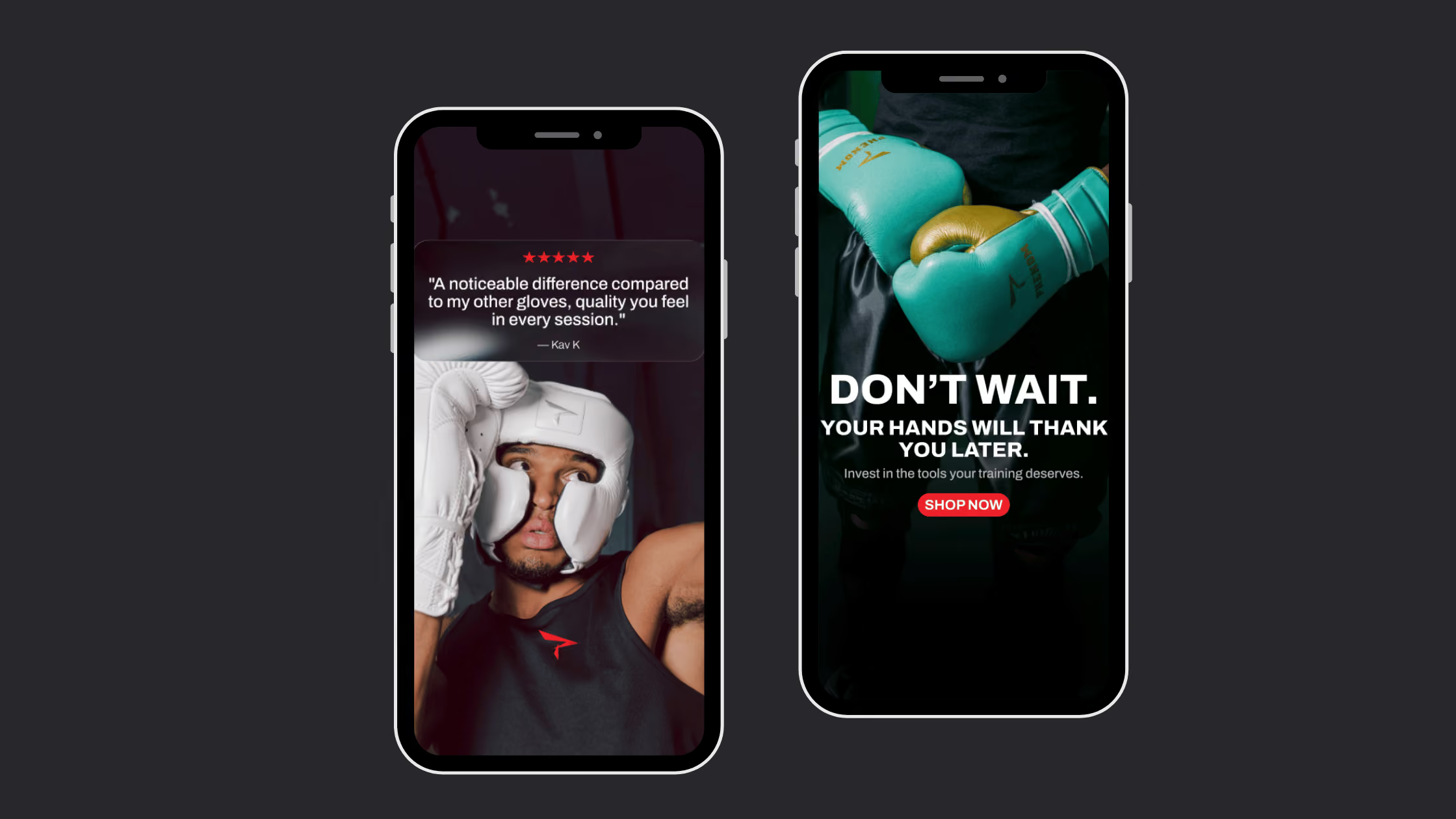
We recently supported Phenom boxing with a 50+ product shoot, the goal was to show products on different bodies and in a way that would make people feel motivated.
Phenom had five Matchroom boxers model products, enabling the Kubix paid media team to produce ad creatives that would drive visitors to find new products or convert, depending on where they are in the funnel.
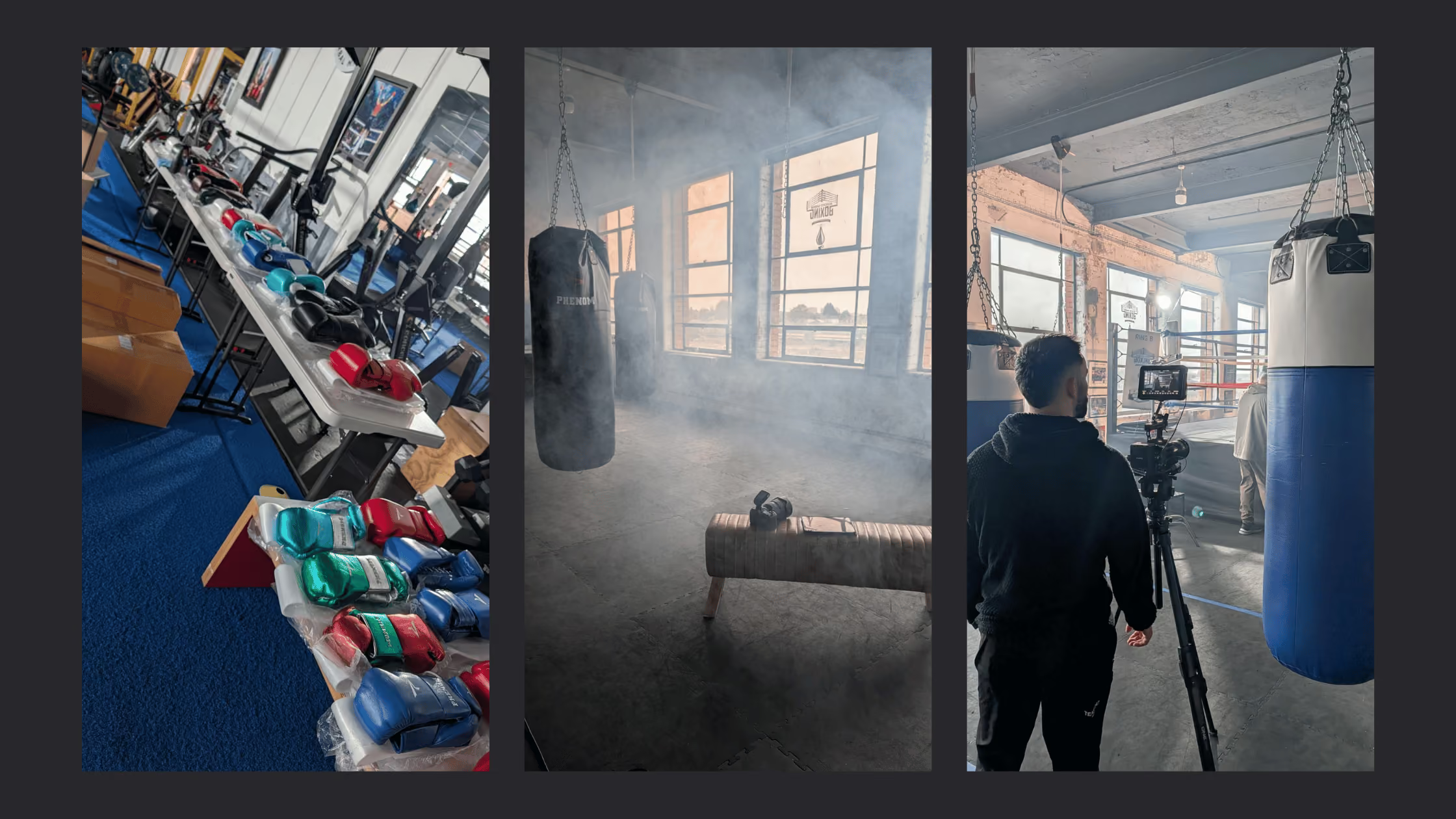
The content produced on Phenom’s shoot day allowed them to build up creatives for organic social media, paid and other channels. Because of the process that Phenom has in place, the Kubix team had a lot of creative assets to work with, test and learn from.
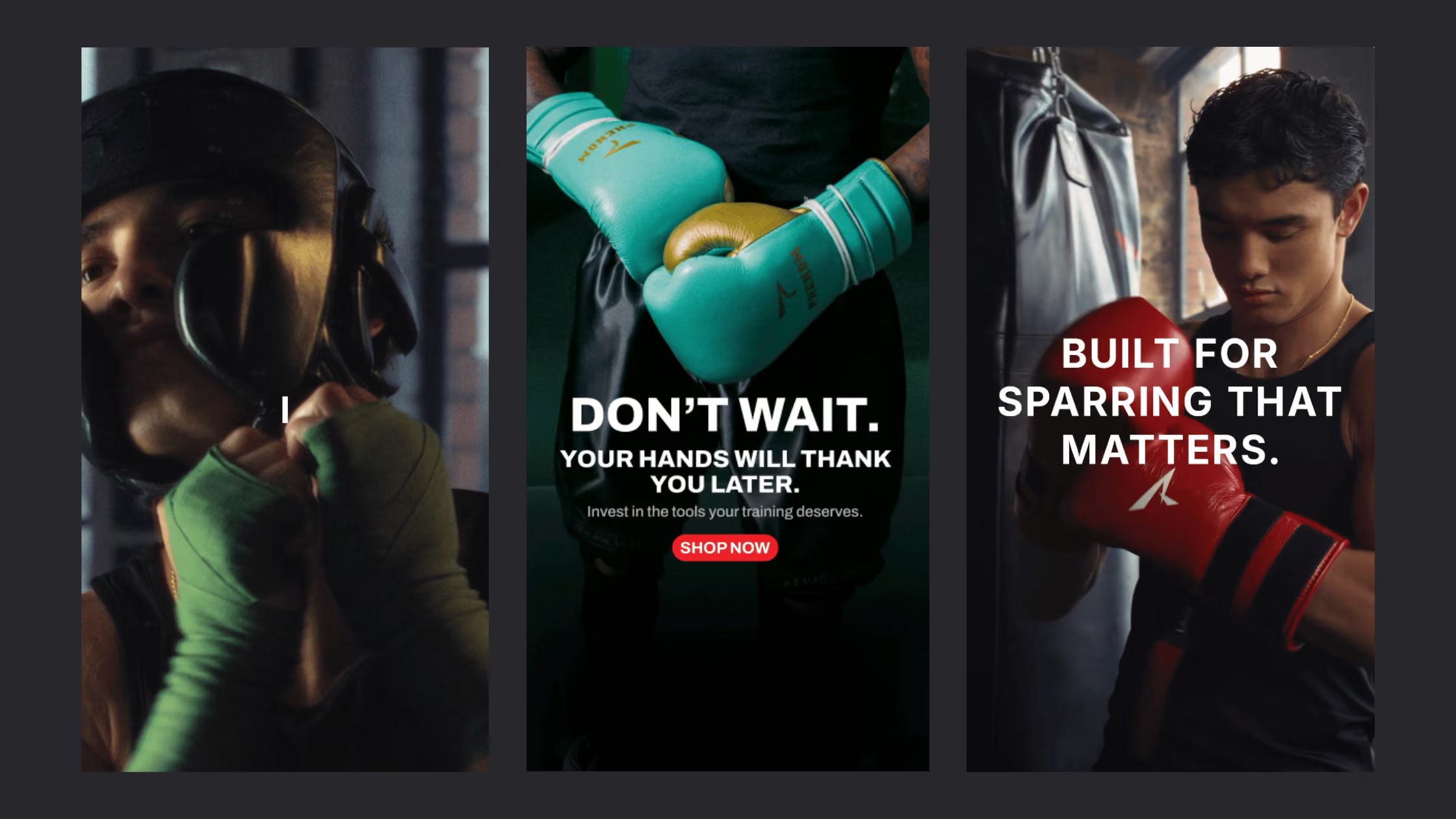
A brand with a good content production structure can take one strong idea and turn it into several useful assets. A video of an athlete hitting the bag, can quickly be changed for a motivational, bottom of the funnel ad that speaks about the product benefits customers can appreciate.
There are multiple ways content can be adapted to feed into your paid ads strategy.
For example:
- Long-form product demo becomes three short paid social ad creatives
- Customer reviews becomes a UGC social video
- Founder explanation becomes a landing page section
- Behind-the-scenes clip becomes organic social content
- FAQ answer becomes a retargeting ad
- Product feature becomes a comparison creative
This gives the brand more value from every piece of content created.
It also helps paid and organic teams work together properly. Organic content becomes a testing ground for ideas. Paid media becomes a scaling mechanism for the messages that show commercial potential.
Creative testing needs structure
If every asset is just a slightly different version of the same message, the account may find a winner, but the team will not understand why it worked. More creative is only useful if the brand knows what it is trying to learn.
A stronger creative testing framework looks at specific variables, such as:
- Hooks
- Product benefits
- Format
- Proof points
- Offer
- Customer problem
- Stage of awareness
- Landing page message match
For example, if a furniture brand is advertising a sofa, the test should not only be “which image looks better?”
It should be structured around what the brand is trying to learn. One test might explore whether customers respond more strongly to comfort, delivery, fabric quality, size, durability or styling. Another might compare a lifestyle video with a product-first static asset to understand whether the audience needs to see the sofa in context or inspect the product more directly.
The same thinking can be applied across the message. A review-led ad may build more trust than a discount-led one. Delivery reassurance might improve the quality of clicks by removing a common buying concern earlier in the journey. The landing page then needs to carry the same promise through, so the customer sees a consistent message from advert to product page.
That is how you can start to turn a creative into a learning tool for better performance. It helps the brand understand what customers need to see, feel and believe before they buy.
It helps the brand understand what customers need to see, feel and believe before they buy.
Why is creativity important to scaling paid ads
If the creative is not strong enough, more budget can expose the weak creatives faster.
Having a strong process for developing ad creatives enables ad accounts more room for growth and brands more flexibility with the organic content they’re able to post, and what they can then produce in terms of ad creatives.
Having a process helps campaigns reach new audiences, refresh tired messaging, reduce creative fatigue and give platforms more useful signals. It also helps brands avoid becoming too dependent on discounts, because they can test other reasons to act, such as quality, convenience, proof, product education, gifting, speed or customer experience.
For larger eCommerce brands, small improvements in creative efficiency can have a significant impact on driving higher intent traffic and achieving better ad performance. A stronger hook on a video could result in reducing wasted impressions from people who weren’t drawn in enough and just scroll.
Clearer positioning of a product within the creative can help improve the quality of clicks through to your website from consumers who are more likely to convert.
This creative process gives a lot of room for strategic growth, testing and creative reiteration for paid media teams.
How Kubix thinks about creative and paid media
At Kubix, we’re a full service platinum Shopify agency. Supporting brands with paid media across Meta, TikTok, Reddit; conversion rate optimisation, UX and more. We see paid media as part of the wider eCommerce system.
A brand can scale more efficiently when insights are cross-pollinated across paid media, UX, CRO and development teams sharing what they’re seeing, learning from each other, and feeding those lessons back into the wider customer experience.
For us, the goal is not just more creative. It is better inputs, clearer learning and stronger, more strategic decisions.
Need a stronger approach to paid ads?
Kubix helps eCommerce brands bring structure to paid ads, creative testing and the wider customer journey, turning campaign learnings into clearer actions across your Shopify store. Get in touch with our team.