


Modern eCommerce is constantly changing. Spurred on by advancements in technology and consumer buyer habits constantly shifting, there’s a huge need for eCommerce businesses not only to own their own data, but to collect it in a genuine way and feed it into other parts of the business.
As eCommerce Consultants and Shopify Platinum Partners, many growing businesses come to us for support as they hit their own growth ceiling. Every brand will have a unique problem that they’re trying to solve, and often this can go back to data.
In this blog, we’re going to explore retention strategies for eCommerce businesses in 2026, how you can retain more customers with unique strategies and actionable tips.
eCommerce retention strategies we’ll unpack:
- Which retention benchmarks actually matter, and why category and maturity are more important than averages
- How to use Customer Lifetime Value, Customer Acquisition Cost and LTV:CAC ratios to make better growth decisions
- The role of first-party and zero-party data in a post-cookie world
- How Shopify merchants are turning retail, operations and POS into retention engines
- Why on-site quizzes and intelligent segmentation outperform traditional pop-ups
- How to design retention-led tech stacks that reflect how your customers actually buy
Why owned audiences matter for eCommerce retention in 2026
This year marks a turning point for eCommerce brands. The cost of acquiring new customers continues to rise, competition for attention is fiercer than ever, and performance marketing is no longer the predictable growth lever it once was. Paid acquisition still matters, but it is no longer enough on its own. Margins are tighter. Channels are noisier. And every incremental gain is harder won.
In this climate, retention has stepped out of the shadows, no longer a supporting marketing tactic, but a core commercial lever. The brands growing strongest are not simply spending more to acquire customers. They are building systems that make every customer more valuable over time.
This is where the shift becomes clear. For years, eCommerce relied heavily on rented audiences. Social platforms, marketplaces, third party data, and paid media did the heavy lifting. But those relationships were never fully owned. Algorithms changed. Costs climbed. Visibility fluctuated. What businesses are now prioritising is control. Zero & First party data.
Direct relationships. Experiences that are shaped by insight, not guesswork.
At the centre of this shift sits a single North Star metric: Customer Lifetime Value.
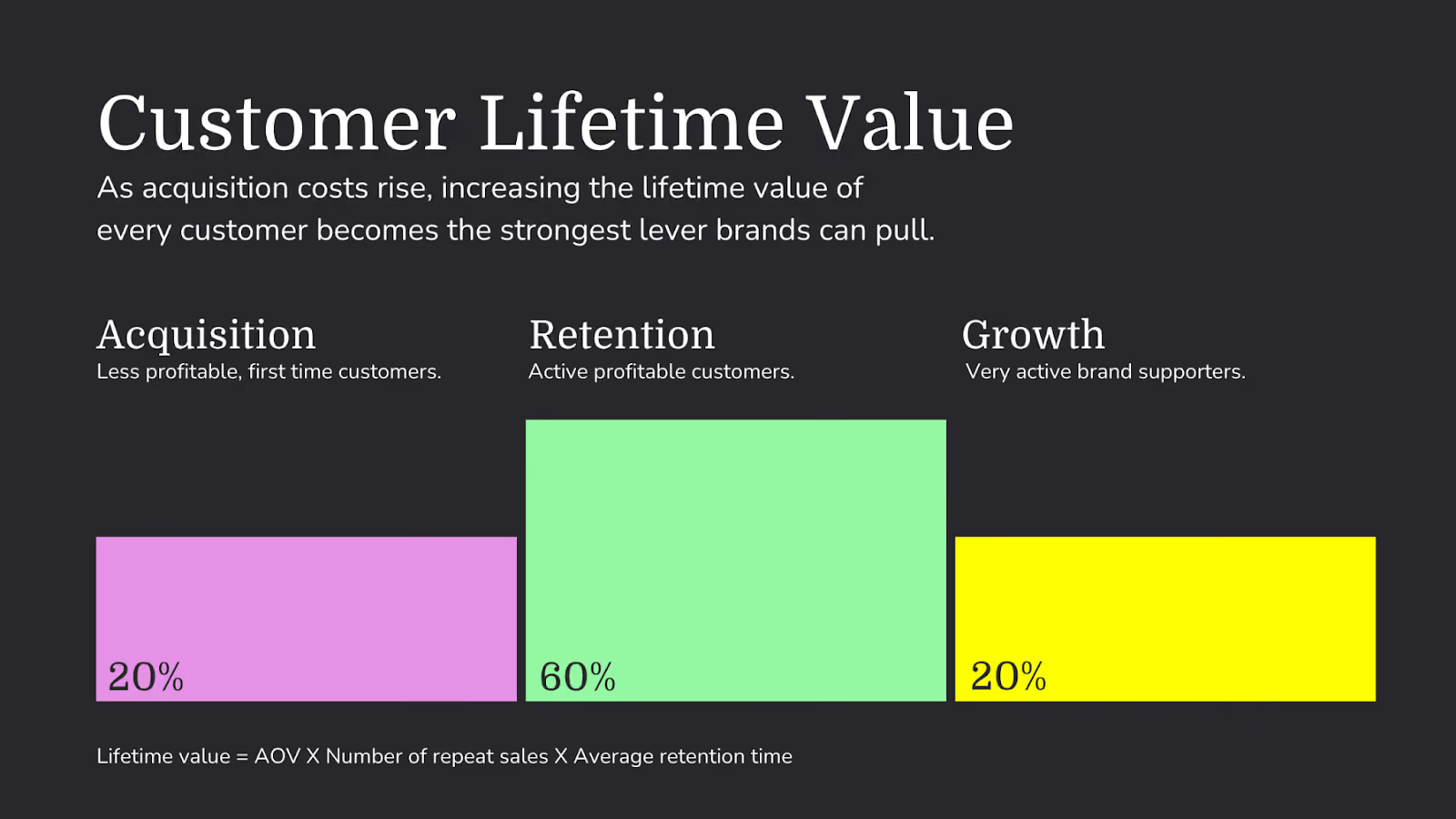
Customer Lifetime Value, or CLV, defines the total value a customer delivers across their entire relationship with your brand. It reframes growth away from one off transactions and towards long term contribution. When paired with Customer Acquisition Cost, CLV becomes the commercial reality against which eCommerce leaders are now measured. If CAC continues to rise, the sustainable response is to increase the lifetime value of every customer you acquire.
This is where modern retention strategies often go wrong. Retention is not about sending more emails, launching more offers, or filling inboxes with noise. That approach scales activity, not value.
The key takeaway for customer retention is how you can make the customer feel valued enough to continue to shop with your business.
eCommerce Retention Benchmarks: What Leading Brands Actually Track
Retention is one of the most misunderstood areas of eCommerce performance. Plenty of brands can quote a benchmark. Far fewer can explain what it actually means for their growth model, margin pressure, or acquisition efficiency.
What is a good repeat customer rate in eCommerce?
With so many different variables within a business, the honest answer is that it depends. And that’s exactly why generic benchmarks can mislead more than they help.
There can be a huge difference in the way that different consumer segments act, where and how they shop and what products they’re interested in. That’s why a lot of businesses are left confused when they feel they’re underperforming when compared to their competitors.
Why eCommerce retention benchmarks vary by category
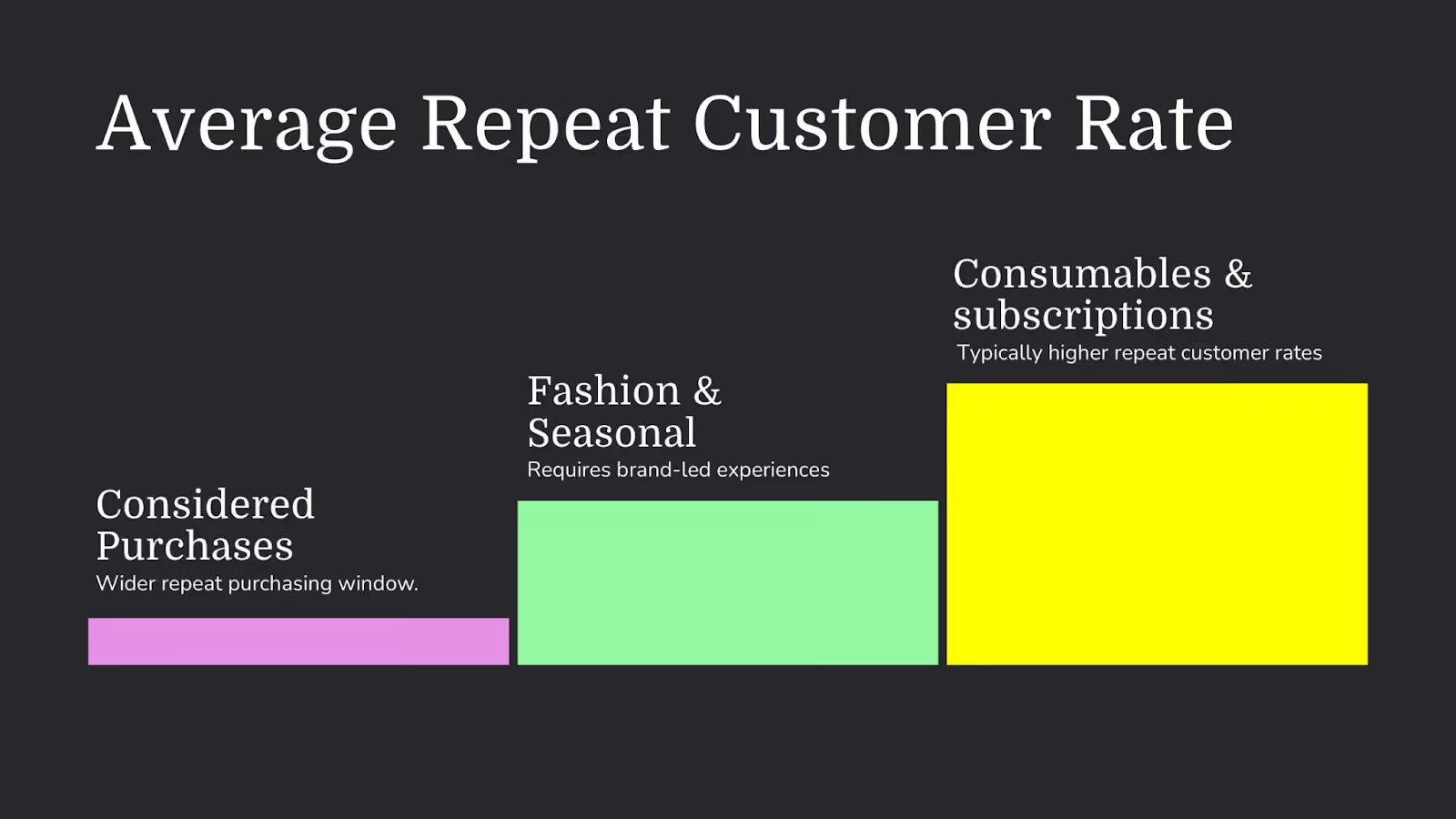
Consumables and replenishable products
In categories like pet food, supplements or beauty refills, repeat rates are naturally higher. Customers build habits quickly, and value is delivered through convenience, consistency and trust. Success here is less about constant re-acquisition and more about retention systems that remove friction and reward loyalty.
Fashion and seasonal categories
Furniture accessories, homeware ranges or seasonal beauty drops tend to sit lower on repeat purchase frequency. Growth relies more heavily on brand affinity, storytelling and awareness. When customers do return, it’s because the brand has stayed top of mind rather than because the product was urgently needed.
High AOV and considered purchases
Larger furniture pieces or premium beauty devices often come with longer gaps between orders. Repeat rates may look weaker in isolation, but lifetime value can still be strong. These brands win by focusing on post-purchase experience, education and cross-sell opportunities that extend the relationship beyond the initial transaction.
Comparing a DTC skincare brand to a home furniture retailer using the same benchmark isn’t insightful. It’s noise and can confuse things in the long run.
Why retention maturity matters more than raw retention percentages
Retention performance should always be considered alongside business maturity.
Early-stage businesses often rely heavily on acquisition and see lower repeat rates initially.
More mature brands may see retention systems do more of the heavy lifting.
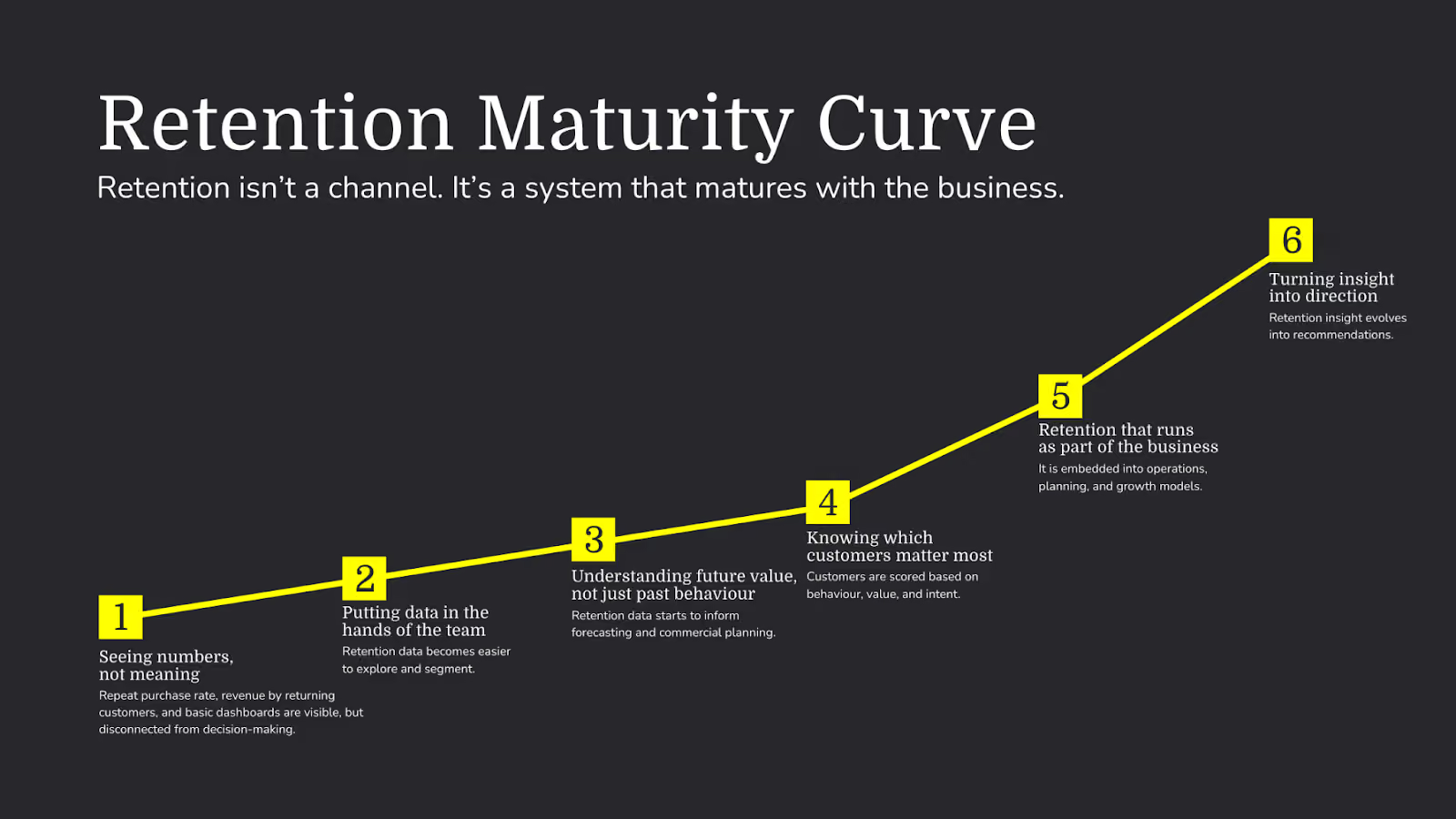
What matters most is alignment:
- Do your lifecycle channels support how customers actually repurchase?
- Are returning customers driving a growing share of revenue?
- Is retention reducing pressure on paid acquisition?
This is where benchmarks stop being numbers and start becoming a strategy for growth.
CLV vs CAC: why the ratio matters more than the metrics alone
We’ve seen a lot of businesses reporting on Customer Lifetime Value and Customer Acquisition Cost separately. Rightly so, as they measure different parts of the business.
Reporting on them individually gives insight as to where a business is growing or declining, and where to begin diagnosing pain points.

A lot of value can be missed for businesses that don’t also measure an LTV:CAC Ratio. The ratio between CLV and CAC will show if the business is profitable at a fundamental level.
How the LTV to CAC ratio unlocks sustainable eCommerce growth
Retention is something that businesses should always be striving to improve. Especially in 2026 when retail is making a comeback, AI is evolving faster than ever and our newsfeeds are flying by.
Having a clear view of these business fundamentals gives you insight into where you can start to unlock growth. A strong CLV to CAC ratio gives brands room to invest, test, and grow with confidence. A weak ratio forces defensive and reactive decisions.
In 2026, businesses should ensure that they are set up with the right reports that can give them the data they need to make key business decisions.
This is a place where a lot of businesses that struggle to scale beyond a certain point find themselves.
How to translate eCommerce metrics into growth decisions
The next phase of growth for most eCommerce brands is already sitting inside their platform, but it is often not being translated into action.
Too often, metrics live in isolation on dashboards while customers move fluidly between channels, devices and touchpoints, collapsing attribution into one blurred journey.
Unified commerce thinking starts by treating data as a decision engine, not a reporting layer.
Take apparel as a simple example. If size-level sell-through data shows recurring dead stock in specific sizes, that is not a merchandising failure, it is a personalisation opportunity.
Mystery bundles built around those sizes allow brands to clear stock profitably while making customers feel seen, rewarded and part of a defined segment rather than a generic audience.
Beyond stock, some of the most valuable retention-led growth signals are often overlooked. Time-to-second-purchase reveals where onboarding and post-purchase experience are breaking down. And refund-to-repurchase gaps highlight where confidence is lost and how service recovery can turn friction into loyalty.
SKU adjacency data shows which products are naturally bought together over time, informing bundles, replenishment reminders and lifecycle messaging.
Even qualitative metrics matter. How a customer answers “How did you find us?” or “What almost stopped you buying?” helps brands understand intent in a world where platforms no longer tell the full story. When customers jump from TikTok to search, to email to in-store, asking the right questions becomes as important as tracking the click.
That’s how retention becomes a growth lever, not just a dashboard statistic.
All retention strategies should start with data collection. Once you have gained the interest of a potential customer enough so that they click, that’s when consumers are forming an opinion on your business.
How and what data you collect can be the difference between a customer that buys once and sits in your marketing database that’s overdue for a cleanse and the one that keeps returning and becomes a brand champion.
First-party and zero-party data strategies for eCommerce retention
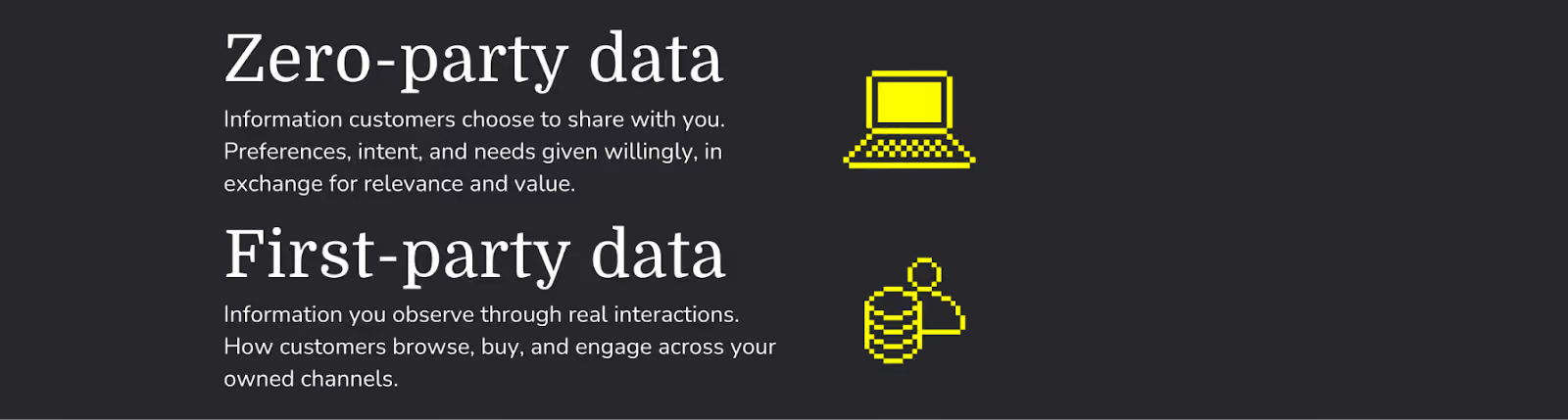
As attribution fragments and third-party signals fade, retention is increasingly shaped by what customers tell you directly and how consistently you act on it. First-party and zero-party data sit at the centre of unified commerce because they are owned, permissioned and inherently connected to intent rather than assumptions.
What zero-party data means for eCommerce retention
Zero-party data is information a customer explicitly volunteers, not something inferred from clicks or sessions. This includes preferences, goals, constraints and motivations that a customer chooses to share because they expect a better experience in return.
Unlike behavioural signals, which fluctuate with mood, device or context, zero-party data ages more slowly because it reflects how a customer sees themselves, not just what they happened to do on a single visit.
That longevity is what makes zero-party data such a powerful retention lever. When a customer has told you what they care about, personalisation becomes cumulative rather than reactive.
Product recommendations, replenishment logic and content can evolve with them instead of constantly resetting based on last-click behaviour. Over time, this creates familiarity and trust, which are far harder for competitors to replicate than price or promotion.
Why first-party data is the foundation of future-proof eCommerce retention
First-party data forms the infrastructure that allows zero-party insight to scale. As privacy expectations shift and platforms tighten access to third-party signals, brands that rely on platform-native data are better positioned to adapt. Purchase history, channel interactions and lifecycle timing all live inside your core systems, making them accessible for AI-driven personalisation without breaching trust or regulation.
For Shopify merchants, this is where platform-native strategies matter. When first-party data is clean, structured and connected across touchpoints, it becomes usable for automation, forecasting and segmentation without the need for constant manual intervention. Retention stops being a series of campaigns and becomes a system that improves as volume increases.
How Shopify POS enables consultative retail and better customer data
From transactional retail to consultative retail experiences
Physical retail is often treated as a revenue channel first and a data source second. However, in-store interactions can be one of the richest opportunities to understand intent, usage and hesitation. A consultative storefront shifts the role of retail from processing transactions to building context.
Moving beyond receipts and loyalty cards means recognising that conversations are data.
The questions customers ask, the concerns they raise and the reasons they hesitate all provide insight that digital channels struggle to capture organically.
How to collect lifestyle and intent data in-store
When store teams are trained to ask the right questions, data collection becomes a natural behaviour rather than intrusive. A haircare customer mentioning dry scalp, someone shopping for new furniture, or a customer buying a product as a gift are all signals that shape future communication.
These moments work because they are framed as service, not surveillance. Customers are far more willing to share information when it helps them make a better decision in the moment.

How to log in-store insights into Shopify customer profiles
With Shopify, Shopify POS, and how you collect data, these insights do not have to live in notebooks or staff memory. Customer preferences can sit alongside purchase history, allowing in-store conversations to influence future emails, recommendations and replenishment flows.
If a customer mentions dry scalp in-store, their next email should not be a generic newsletter about the next product launch. That is where unified data turns a single interaction into an ongoing relationship.
Instead, an alternative welcome flow that welcomes retail customers and speaks to their product interest is far more valuable to both the customer and merchant.
On-site quizzes for eCommerce: the digital concierge approach
Why on-site quizzes outperform traditional email pop-ups
Most on-site opt-ins fail, not because customers do not want to hear from brands, but because the first ask requires too much effort. A standard email pop-up immediately demands cognitive load: type, decide, commit, all in one step. Quiz-style entry points work better because they flip that order. Instead of asking for an email address upfront, they start with a low-effort, low-risk action.
Simple first-party prompts like “Do you want a discount?” with a Yes or No option consistently outperform direct email requests because clicking a button feels easier than entering personal information. It requires less thinking, less trust and less time.
Psychologically, the customer is no longer deciding whether to hand over data, they are simply answering a question. That first micro-commitment changes the dynamic of the interaction.

Once a customer has clicked, the decision to continue becomes easier. When the email field appears on the second step, the mental barrier is already lower because the user has started the process. They are far more likely to complete the action if their trust has been earned and they feel as if they’re going to gain value.
How to design low-friction, high-intent on-site quizzes
High-performing quizzes are not long or complex. They are designed to reduce effort while increasing intent. One to three questions are enough to create momentum without overwhelming the user. The key is sequencing: start with the easiest possible action, then progressively ask for more valuable data once engagement is established.
The most effective questions focus on outcomes or context rather than demographics. A skincare brand might ask about a primary skin concern or skin goal, a drinks brand might lead with flavour preference, and an apparel brand might explore how an item will be used. In each case, the customer feels like they are being guided through a decision, not funnelled into a form.
Discounts can still exist within this flow, but they are framed as a reward for participation rather than a bribe for data. The experience feels helpful first and transactional second, which improves both opt-in rates and data quality.
Once captured, this data needs to be activated. Platforms like Klaviyo allow quiz responses and first-step interactions to drive segmentation, lifecycle messaging and timing automatically. The result is not just more emails collected, but better context for how and when to speak to each customer.
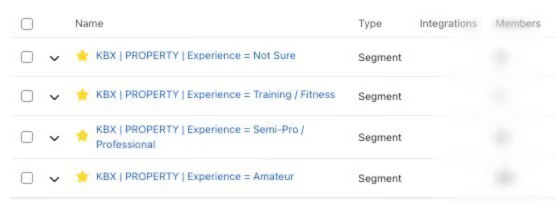
We applied this exact principle with Phenom Boxing by replacing a generic email pop-up with a short, outcome-led quiz that matched how their customers already think about training.
Instead of asking for an email upfront, the first interaction simply asked about experience level and training intent. One click, no form fields, no commitment. That small shift removed friction and reframed the interaction from marketing to guidance.
Each answer served a dual purpose. For the customer, it felt like personalised support. For Phenom, it created meaningful first-party data that could be used immediately across email, on-site messaging and offers. Beginners could be guided towards entry-level gear, while experienced fighters saw products aligned with sparring, competition or conditioning.
How to turn customer data into measurable retention outcomes
Predictive replenishment and re-ordering
When purchase cycles are combined with stated preferences, brands can move from reminders to anticipation. Predictive replenishment respects a customer’s rhythm rather than forcing urgency, reducing churn by staying relevant instead of repetitive.
This approach works particularly well for products with irregular usage patterns, where timing matters more than frequency. A zoomed out view of data and reporting over the year will give you a clear picture of your customer purchasing patterns.
With context from your customers on what their product interest is and data backed by historical performance and seasonal events, you can start to adapt and tailor your marketing.
Segmented email and SMS strategies that replace broadcast campaigns
Segmentation becomes more powerful when it reflects real-world context. Climate-specific care advice, education-led content and behaviour-driven timing outperform generic promotions because they respect where the customer is, not just who they are.
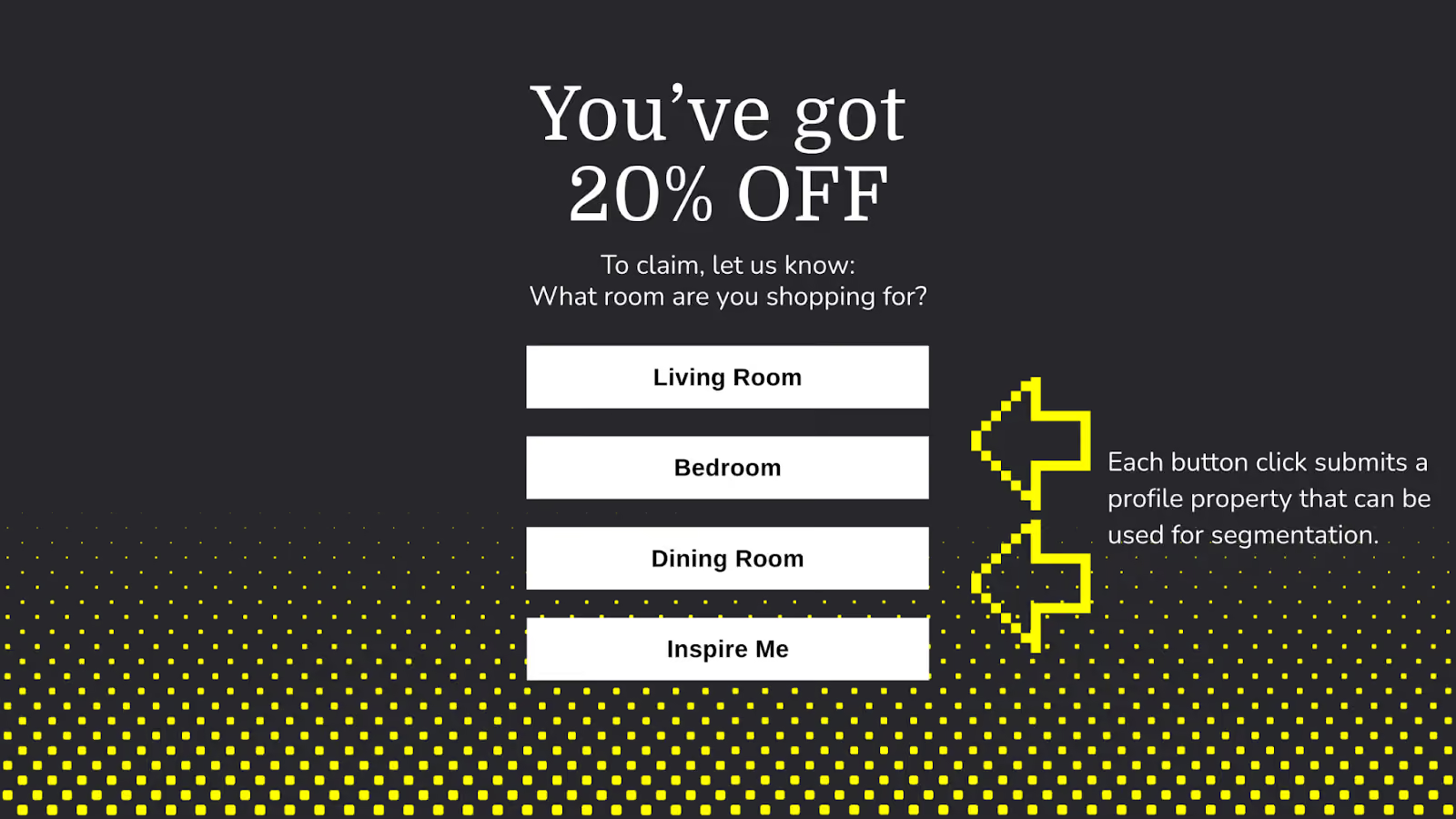
Broadcast campaigns flatten nuance. Segmented communication preserves it. If it’s a busy shopping season and gifting is a huge part of your business, rather than shouting about a discount, you could experiment with collecting a bit of data first on who they’re shopping for.
For a jewellery brand on Shopify, you should consider adding customer segmentation on whether people are buying for themselves, a loved one or another family member. That will give you an indication of when you should send your next communication to specific audience segments. If someone has previously bought during a gifting period, such as Black Friday and has selected their shopping for gifts, they probably don’t want to hear about your next special offer.
If you have a segment set up for people who selected buying for a loved one, a timely email right before Valentine’s Day may catch their attention and could potentially result in a purchase rather than an unsubscribe.
Furniture brands might consider experimenting with their pop-up forms in Q2 as they’ll start to see a bigger spike in demand for redecorating and new furniture. Asking specific questions about what they’re shopping for will allow your business to serve more relevant messaging to them.
Are you furnishing a new home, replacing furniture, upgrading a room, or just window shopping?
Loyalty 2.0: beyond points and discounts
Where eCommerce led in online sales and technology infrastructure, retail led with Loyalty.
Modern loyalty is less about accumulation and more about access. Tiered models based on behaviour, rewards aligned to stated preferences, surprise benefits and early access tied to genuine interests all reinforce a sense of belonging.
Businesses should take the time to understand their customers and design a loyalty program that will benefit potential customers and the business in the long run. Community-led growth emerges when loyalty feels earned through engagement, not purchased through spend alone.
If one of your eCommerce goals for 2026 is to expand and offer more retail experiences, having early or VIP access to the launch events is a strong way of getting more customers to join your loyalty programme.
Again, it goes back to having data and an automated infrastructure that enables you to develop a loyalty programme that is connected across all channels, giving you the ability to offer a seamless shopping experience that keeps customers returning.
Reducing friction across customer retention experiences
Once a customer has made a purchase, businesses have a really unique opportunity to build on brand loyalty and trust. This trust won’t convert into revenue instantly, but taking customers on a journey around the product they’ve just purchased is more likely to lead to a repeat purchase.
Think about a new customer as a new family member. Explaining to them how they can use the product they’ve just purchased, best storage or assembly instructions, rather than requesting a review or trying to cross-sell.
How to improve customer experiences through eCommerce operations
Customers not returning can often be a symptom of misalignment rather than dissatisfaction. More often than not, a negative review will come as a result of an experience that’s out of your control, such as shipping delays or incorrect items received.
First impressions count, simply making sure a product that a customer has purchased arrives on time can drastically improve customer satisfaction. Whilst speed is important for the most part, accuracy is what can really win brand loyalty.
A practical example of how improving operations can elevate customer experience is found in how Shopify now handles order edits and customer communication post-purchase.
Traditionally, if a customer spots a mistake in their order, their only option was to contact support, wait, and hope someone could manually cancel and recreate the order. That friction is exactly the kind of misalignment that leads to frustrated customers, negative reviews, and ultimately non-returning buyers.
Shopify’s built-in order editing lets merchants make adjustments to orders before they’re fulfilled, for example, adding or removing items, changing quantities, or updating the shipping address, all directly in the Shopify Admin. This means your operations team can correct errors quickly without cancelling the order and disrupting fulfilment.
Having an operations structure like this will have benefits throughout the business, and using AI and other third-party tools to enable self-serve order updates only helps build on the brand experience.
How to build the right tech stack for modern eCommerce retention
Modern retention strategies are enabled by connected tools that share data rather than isolated solutions. The challenge for many brands is not a lack of technology, but an accumulation of it. Legacy systems and bolt-on tools often create fragmented views of the customer, where marketing, operations and retail are working from different versions of the truth. This disconnect makes retention harder to scale because insight is delayed, duplicated or lost entirely.
A strong retention-led tech stack on Shopify is not about adding more apps, it is about choosing the right ones and ensuring they speak to each other. Shopify’s ecosystem works best when data flows cleanly between storefront, marketing, fulfilment and retail touchpoints, allowing customer behaviour and preferences to inform decisions in real time. When platforms like Shopify POS and lifecycle tools such as Klaviyo are aligned, retention becomes embedded into day-to-day operations rather than managed as a separate initiative.
There is no universal “best” tech stack. A subscription-led brand will prioritise different data flows to a seasonal clothing business. Retention maturity, order frequency, product complexity and operational scale all influence what the right architecture looks like. The goal is not to copy another brand’s setup, but to design a system that reflects how your customers actually buy, return and re-engage.
When technology is selected with retention in mind and integrated with intent, it stops being a constraint and starts acting as growth infrastructure. The most effective Shopify stacks are not the most complex, they are the most coherent, built around the specific behaviours and realities of the business they support.
Retention is built by listening, not discounting
Strong retention is the result of long-term relationship thinking, not short-term incentives, which helps build a stronger business.
Data should be treated as an investment that compounds over time, not a campaign metric that resets each quarter. Brands that listen consistently outperform brands that shout frequently.