


Shopify is moving at pace with AI updates, but not every update will feel immediately useful for day-to-day eCommerce teams.
Instead of using AI to write product descriptions, summarise reports or speed up admin tasks, SimGym applies AI to one of the hardest parts of running an online store: understanding how customers might behave before a change goes live.
As a Shopify Platinum agency, we’re constantly understanding UX problems, learning from user behaviour and deploying A/B tests based on our findings.
Reporting on a split test for eCommerce can often present some interesting results.
What you think is a better-looking product page, may hide key buying information. A new layout might feel cleaner internally but could add friction for the customer.
SimGym gives Shopify merchants a way to test those decisions with AI shoppers before real customers experience them.
That does not mean AI shoppers are about to replace CRO, UX research, A/B testing or real customer data. They should not. But they could become a useful early signal in the decision-making process, especially when teams need more confidence before making changes to a live Shopify store.
What is Shopify SimGym?
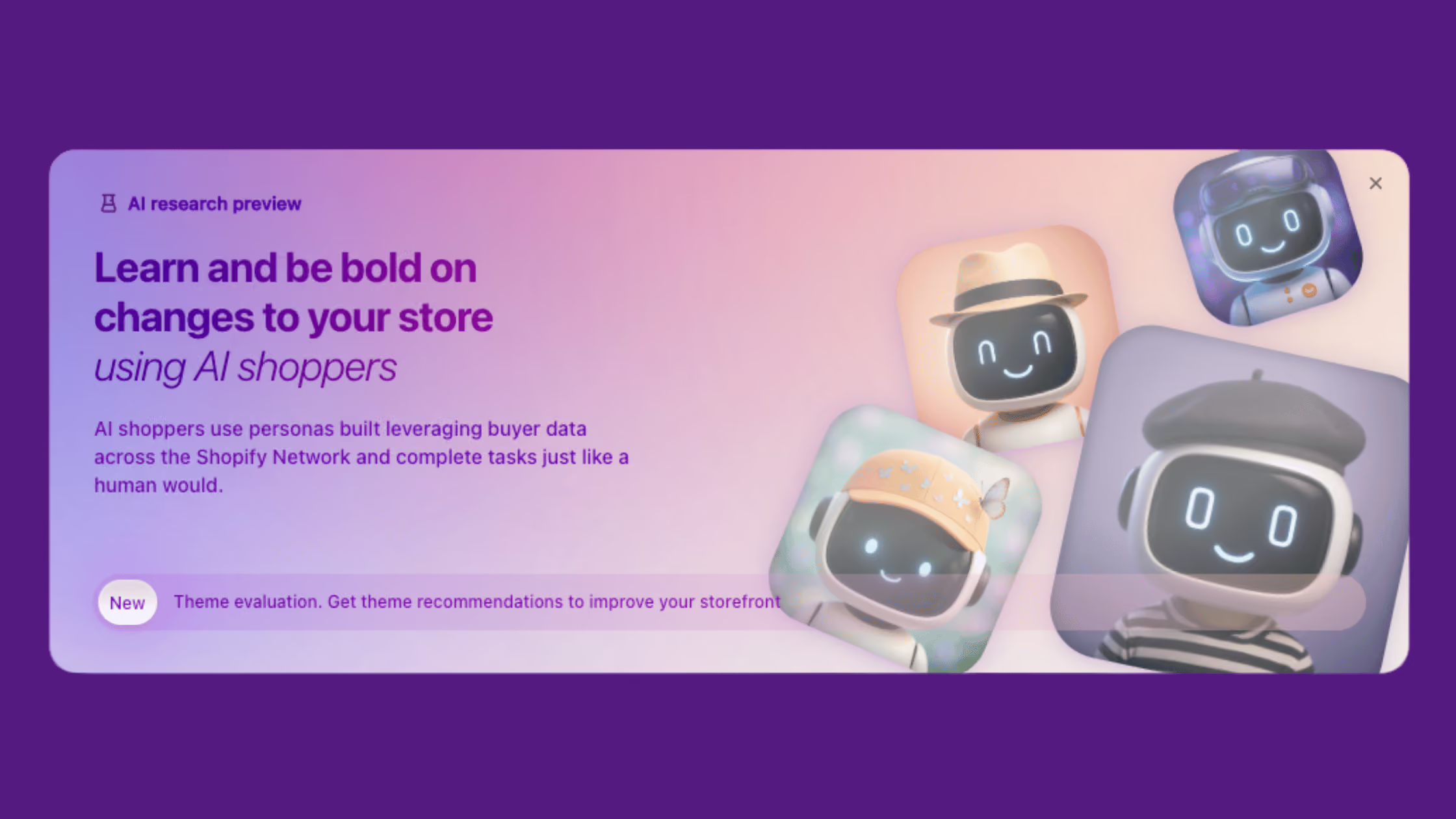
Shopify SimGym is a Shopify app currently available in AI Research Preview. It uses AI shoppers with human-like personas to indicate how buyers might interact with a Shopify storefront.
SimGym simulates buyer behaviour to provide recommendations from AI shoppers, showing the potential impact on add-to-cart behaviour, shopper navigation and more.
Put simply, SimGym is designed to help eCommerce teams answer questions like:
- Is this new theme easier to shop?
- Can customers find products quickly?
- Are there obvious points of friction before add to cart?
- Does one version of the storefront appear to support a smoother journey?
- Where might shoppers hesitate, get confused or drop off?
That makes it less of a traditional analytics tool and more of an AI-assisted testing environment. It gives teams a way to rehearse storefront changes before sending real traffic into the experience.
Why Shopify SimGym matters
Most eCommerce teams know they should test more often. The challenge is that testing takes time, traffic, processes and confidence.
A full A/B test may not always be possible, some changes can be too operationally complex or you might be running a seasonal promotion.
This is where SimGym becomes interesting.
It gives merchants a way to sense-check storefront decisions earlier in the process, not with perfect certainty, but with enough feedback to challenge assumptions before they become problems on the live storefront.
For example, you might believe a new homepage layout makes the journey cleaner. SimGym might show that simulated shoppers struggle to locate key collections.
A brand might simplify product pages to make them feel more premium. SimGym might highlight that shoppers are missing delivery information, size guidance or trust signals.
SimGym isn’t going to replace real customers or A/B testing infrastructures, but it will point eCommerce teams in the right direction by spotting issues before customers have to experience them.
Testing AI shoppers in Shopify SimGym: helpful signals, not human insight
This is an important caveat.
AI shoppers can simulate behaviour, but they are still simulations. They do not carry the same emotional triggers, price sensitivity, brand loyalty, urgency, budget constraints or hesitation as real customers.
They do not fully understand the commercial context behind your store. They won’t know why a brand chooses to present a collection in a certain way or understand merchandising priorities.
SimGym is another layer of insights brands can leverage signals from to allow them to ask better questions - earlier on in the optimisation process.
The risk is when teams treat AI output as a definite result. It should be taken into context with other parts of the business. If SimGym says one theme performs better, that does not automatically mean it will outperform with real customers.
If AI shoppers identify friction, that does not always mean the experience is commercially broken. The findings still need interpretation.
Stronger decisions will come from combining SimGym with analytics, UX reviews, customer insights, merchandising knowledge and, where possible, real A/B testing.
We ran a Shopify SimGym on a test store to see what sort of feedback AI shoppers can provide. Each shopper represents a customer segment and will have different shopping habits, much like real consumers.
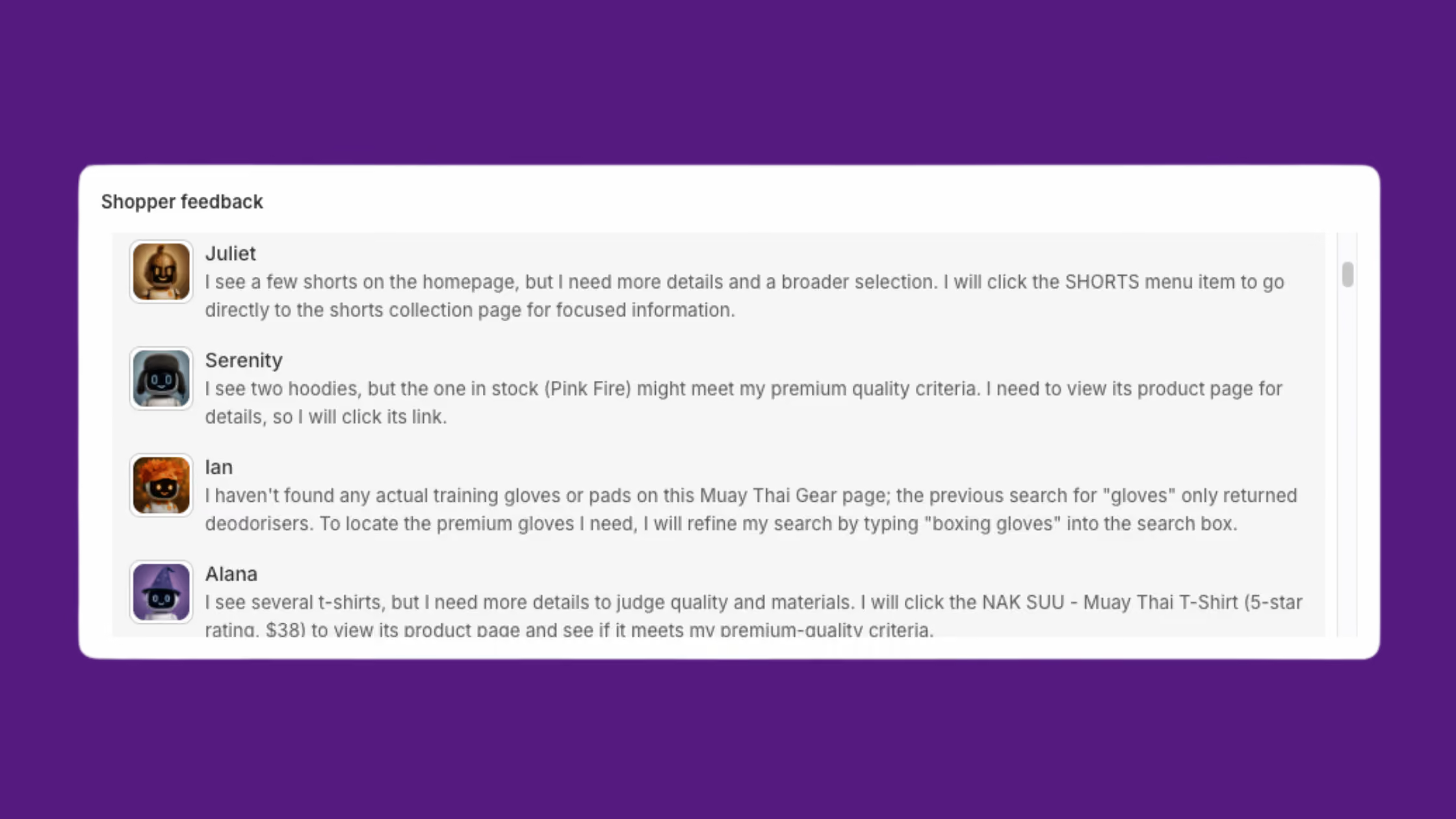
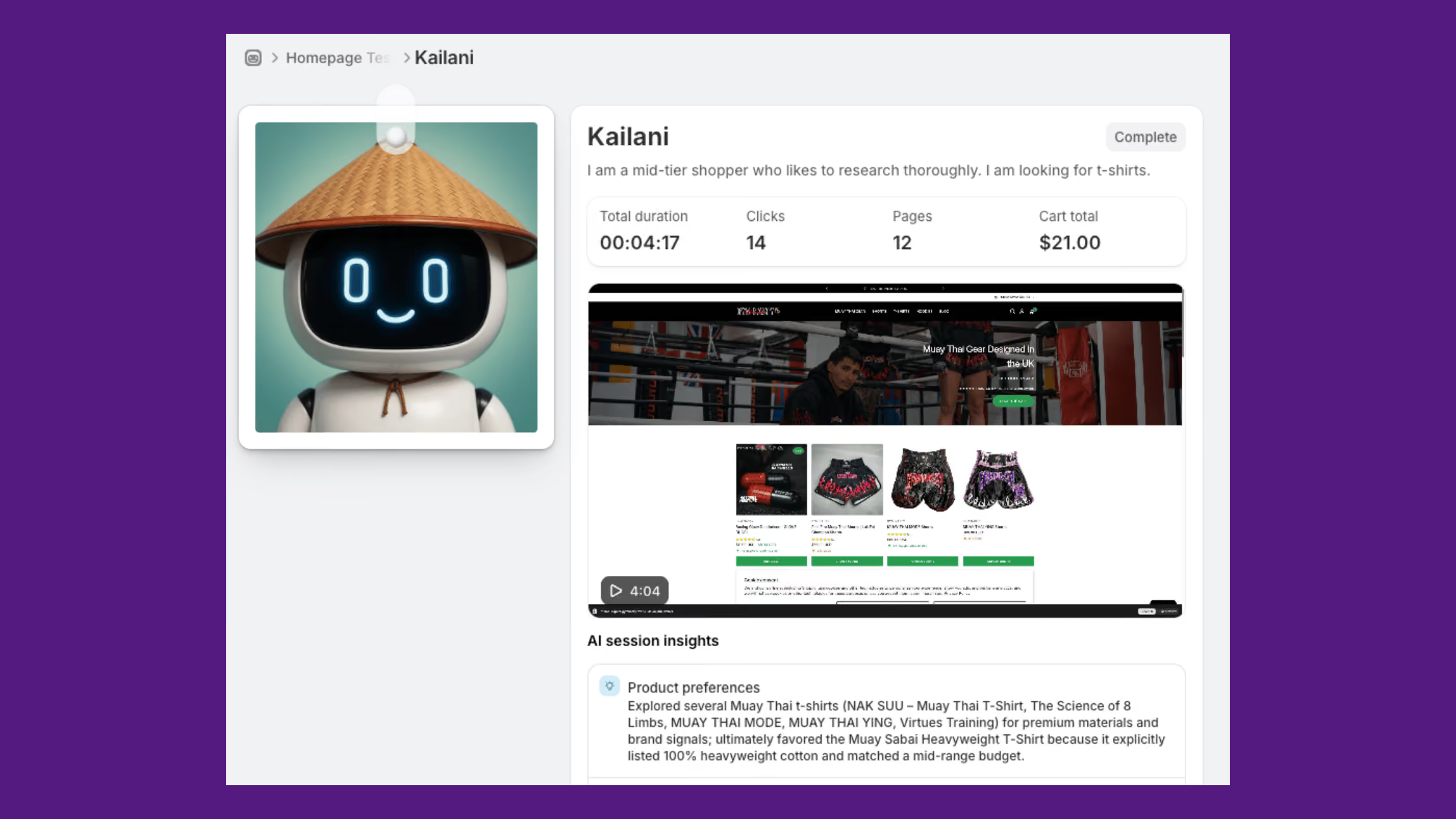
Once the full report is complete, you’ll get a good overview in your Shopify Admin on what actions the AI shoppers carried out, what they were looking for and where their purchasing journey ended.
The reports also show a session recap of each AI shopper, so you can then watch back and see where potential friction points are and gather context from the notes AI shoppers create.
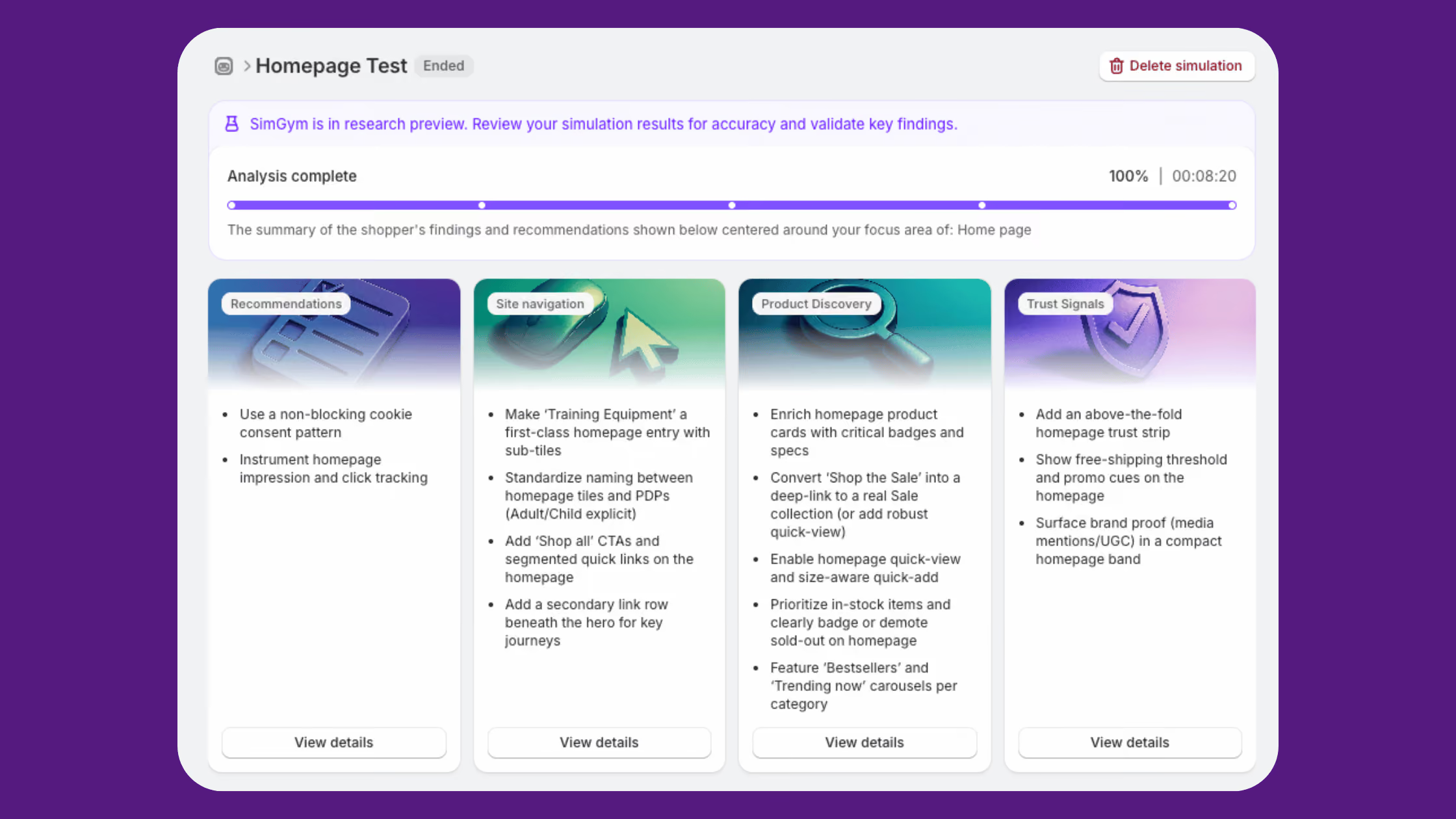
A summary of the rollout will be displayed in SimGym broken down into four key areas. These are general recommendations, site navigation, product discovery and trust signals.
The report gives some great suggestions, such as adding badges to products that give extra shoppers key product information, rather than them having to click through to a PDP to scroll and find that information.
An example of where SimGym may fall short for a lot of brands is when it doesn't understand the external context of your business and products, and will sometimes make recommendations based on products that you do not have in your offering.
SimGym and Shopify CRO: where does it fit?
SimGym sits neatly in the early stages of a CRO process.
It is not the same as A/B testing. It is not the same as heatmapping. It is not the same as watching real session recordings. But it can help teams decide what deserves closer attention.
A sensible optimisation process might look like this:
- Use SimGym to identify potential friction.
- Review the findings against your analytics.
- Sense-check the recommendations with UX and merchandising teams.
- Prioritise the issues that could have the biggest commercial impact.
- Test properly with real customer behaviour where possible.
- Measure the impact after changes go live.
For Shopify brands, this could make CRO more accessible. Smaller teams may not always have the time, budget or traffic levels for continuous experimentation. SimGym gives them a way to begin asking better questions about their storefront.
For larger brands, it could support faster pre-launch decision-making. It gives teams another way to pressure-test ideas before committing development time or risking trading performance.
How SimGym compares to Shopify Rollouts
SimGym and Shopify Rollouts solve different problems.
SimGym helps you simulate behaviour before a change goes live. It uses AI shoppers to provide directional feedback on a theme or storefront experience.
Shopify Rollouts, by contrast, is about exposing real customers to a controlled storefront change and measuring actual performance. That makes Rollouts more useful when you are ready to test with live traffic.
The two tools could work well together. SimGym could help identify which version is worth testing. Rollouts could then help validate that decision with real customer behaviour.
CRO still needs both judgement and measurement.
Is Shopify SimGym worth it?
Shopify SimGym is an early look at where storefront optimisation is heading.
AI shoppers will not replace real customers. They will not replace CRO specialists, UX designers, developers or eCommerce managers. But they can help teams spot friction earlier, challenge internal assumptions and make more confident decisions before changes go live.
For Shopify merchants, that is the real opportunity.
Not to let AI make every storefront decision, but to use it as another layer of insight. One that helps teams ask better questions, test ideas earlier and build experiences that are easier for customers to use.
SimGym is still developing, and its outputs should be treated carefully. But as part of a wider optimisation process, it could become a genuinely useful tool for Shopify teams that want to move faster without relying on guesswork.
Not sure what your next move should be?
From strategy and UX to migrations, integrations and growth marketing, Kubix helps ambitious eCommerce brands turn complexity into clearer, stronger next steps. Get in touch with our team.
FAQs
Is Shopify SimGym available to all merchants?
Shopify announced in March 2026 that SimGym is available in AI Research Preview for all eligible merchants, with no waitlist required. Eligibility may depend on store setup and Shopify’s current requirements.
Does Shopify SimGym replace A/B testing?
No. SimGym provides directional feedback from AI shoppers, but A/B testing uses real customer behaviour. SimGym can help identify what might be worth testing, but it should not replace real-world validation.
Can SimGym improve conversion rate?
SimGym may help identify friction points that could affect conversion, such as confusing navigation or unclear product information. However, any changes should still be measured using real analytics and customer behaviour.
Is Shopify SimGym useful for redesigns?
Yes, SimGym could be useful during redesign projects because it allows merchants to compare a draft theme with their current theme before publishing changes. It can help teams spot potential issues before a new experience goes live.
Should Shopify brands use AI shoppers?
AI shoppers can be useful as part of a wider optimisation process. They should be used to support decision-making, not replace human judgement, customer insight or CRO expertise.

.png)