




At Retail Reimagined in Birmingham, retailers, technology partners and the Kubix team came together to explore what connected retail looks like in practice. The afternoon, run in partnership with Shopify, included presentations, a merchant Q&A, hands-on demonstrations and candid conversations about the operational work behind a joined-up customer experience.
Unified commerce means running stores and eCommerce from connected customer, inventory, transaction and reporting data. It gives teams one clearer view of the business, rather than asking each channel to work around a separate set of systems. That principle ran through the event, whether the conversation was about checkout, customer recognition, footfall or staff planning.
Retail does not need another disconnected system
A new till can change how a payment is taken, but it does not automatically connect the rest of a retail operation. The real work sits around the transaction: how stock is allocated, how returns cross channels, how customer records are matched, how finance reconciles sales and how store activity appears in reporting.
That is why a unified commerce project has to start with the operating model. Retailers need to decide which system owns each piece of data and what store teams must be able to do without leaving the point of sale. When those decisions are clear, technology can support the workflow rather than adding another layer for staff to manage.
The shop floor still has a data gap
eCommerce teams can see visits, product views, baskets, purchases and conversion rates. In many physical stores, the equivalent view still stops at sales and a basic door count. That leaves a gap between knowing how many people entered and understanding what happened during their visit.
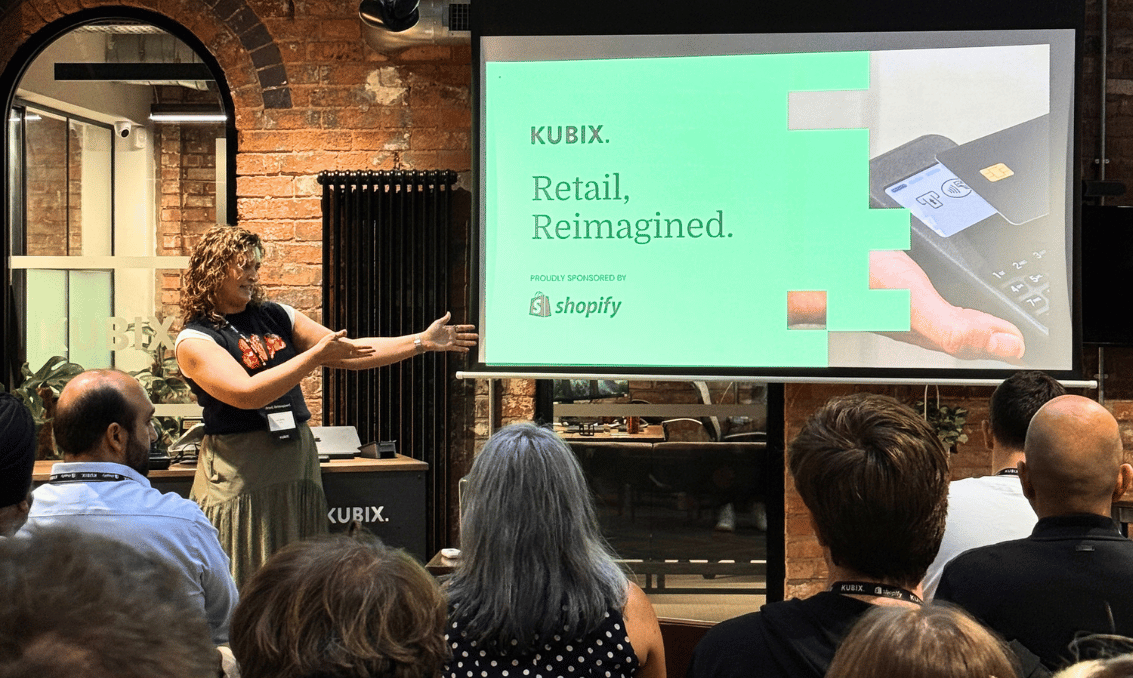
During the panel, we demonstrated an AI-powered footfall tracker designed to close part of that gap. Created by Avia, instead of recording only entries and exits, the device follows a visit through non-identifying visual attributes, such as clothing colours. This allows retailers to measure live visitor numbers and dwell time without trying to identify the person behind the visit.
Footfall becomes useful when it explains behaviour
A raw footfall number has limited value on its own. It becomes more useful when retailers can compare it with transactions, trading hours, staffing and activity in a specific store.
The tracker shown at the event brings measures familiar to eCommerce into physical retail. A store team can see how many visitors are present, how long people browse and the proportion of visits that become purchases. In-store conversion can be calculated by dividing the number of transactions by the number of customer visits over the same period.
That creates better questions. If footfall is healthy but conversion falls, is the issue availability, merchandising, queue time or staff coverage? If dwell time rises without a matching increase in sales, are customers struggling to find information or waiting for assistance? The data does not provide every answer, but it gives teams a more useful place to investigate.
Cleaner counts improve staffing decisions
Traditional counters can overstate footfall when employees repeatedly move through an entrance. The device demonstrated at Retail Reimagined can mark staff at the start of the day and exclude their movements from customer counts. That gives retailers a cleaner basis for comparing traffic and transactions.
Reliable hourly and daily patterns can also improve rota planning. Store leaders can place more cover around proven peaks, review whether quiet periods are consistently overstaffed and compare labour decisions with customer demand. This is more useful than relying on assumptions or last year’s schedule when trading patterns have changed.

Privacy needs to be designed into measurement
Better measurement should not depend on identifying individual customers. The tracker discussed at the event uses visual attributes to follow movement during a visit rather than facial recognition or personal identity. Retailers still need to assess their own privacy obligations, data flows, retention settings and store communications before introducing any tracking technology.
The practical principle is simple: collect the least data needed for the decision. If the goal is to understand traffic, dwell time and conversion, the system should be configured around those measures rather than gathering personal data without a clear purpose.
A connected customer view can remove checkout friction
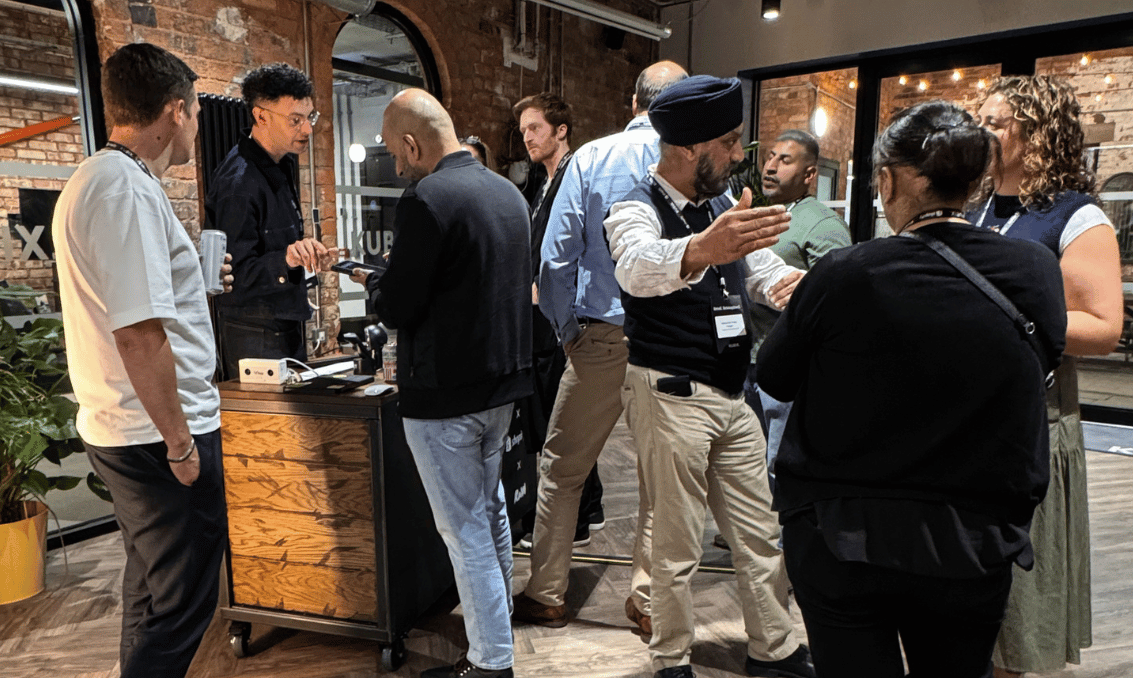
In a live demonstration, Joseph Brown, Operations Director at Kubix, showed how Shopify POS and Shop Pay can help connect an in-store transaction with an existing digital customer relationship. For customers already using Shop Pay, the terminal can make it easier to receive a digital receipt and share details already associated with that account, instead of spelling out an email address at the till.
The value is not simply quicker data capture. A cleaner customer record can help retailers connect purchases across channels, support more relevant service and avoid creating duplicates that weaken reporting. Any data sharing still needs a clear customer choice and a process that staff can explain confidently.
Unified commerce depends on operational decisions
The event repeatedly returned to the decisions behind the interface. Before a retailer rolls out connected commerce, it needs clear answers to questions such as:
• Which system is the source of truth for inventory, customers, products and pricing?
• How should online orders, in-store purchases, refunds and exchanges appear in reporting?
• Which customer information should store teams be able to access, and why?
• How will footfall, dwell time and store conversion be reviewed alongside sales?
• What needs to change in staff permissions, training and day-to-day workflows?
For a more detailed implementation checklist, read our guide to planning a Shopify POS rollout across multiple locations.
Start with a small retail measurement framework
Retailers do not need dozens of new reports on day one. A useful starting point is a short set of measures that people can act on consistently: customer visits, transactions, in-store conversion, dwell time and traffic by hour. Each metric should have an owner, a review rhythm and a decision attached to it.
For example, store managers may review hourly traffic against rota coverage, while trading teams compare conversion and dwell time across locations. The purpose is to make store activity visible enough to improve decisions, not to recreate a complicated eCommerce dashboard on the shop floor.
What we took away from Birmingham
The strongest retail technology connects the work that already matters. Customers should be recognised across channels when they choose to be. Store teams should have the information needed to serve them. Operations and trading teams should be able to compare traffic, conversion and sales without stitching together reports by hand.
For retailers exploring that move, the next step is to map the current customer journey and the systems behind it. Identify where data breaks, where staff repeat work and which store decisions are being made without reliable evidence. That gives a unified commerce project a practical scope and a way to measure whether it is working.
If you want specialist help assessing, configuring or rolling out the platform, explore our Shopify POS support services. For a broader introduction to the platform, hardware and connected retail, download the Retail Reimagined guide.
Questions retailers ask about connected store data
What is unified commerce in retail
Unified commerce connects store and eCommerce operations through shared customer, inventory, transaction and reporting data. It gives teams a consistent view across channels instead of asking separate systems to exchange incomplete or delayed information.
How do retailers calculate in store conversion
Divide the number of in-store transactions by the number of customer visits during the same period, then multiply by 100. The quality of the result depends on accurate footfall data, consistent time periods and the removal of staff movements from visitor counts.
How is AI footfall tracking different from a standard counter
A standard counter usually records movement across a doorway. The system demonstrated at Retail Reimagined can follow a visit through non-identifying visual attributes, which supports measures such as dwell time and can distinguish staff movement from customer traffic. Retailers should still assess privacy, retention and transparency before deployment.


.png)